Welcome to Modern Adult Orthodontics
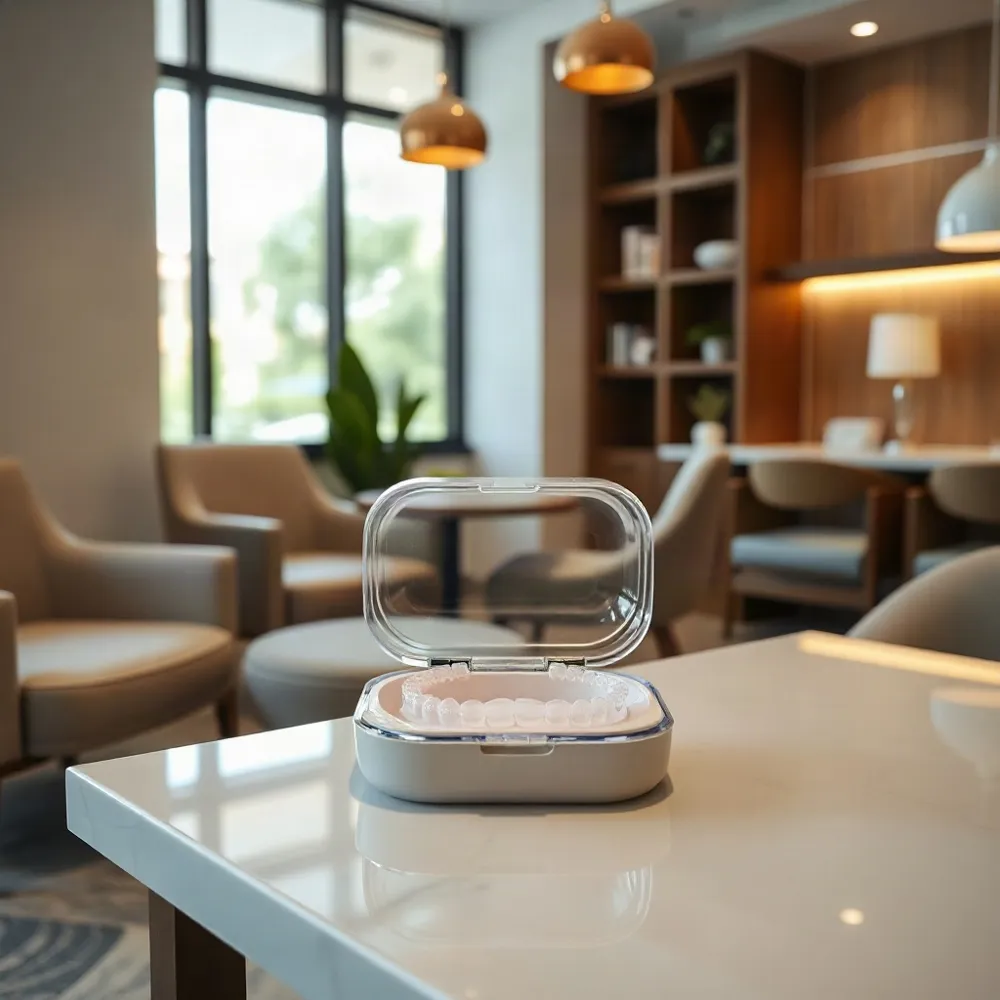
Adults are increasingly seeking orthodontic care because a straight smile enhances confidence, improves oral health, and can correct bite problems that lead to gum disease, tooth wear, or chewing difficulties. Modern practices recognize that professional and social settings demand discreet solutions, so today’s options combine aesthetic subtlety with high performance. Digital 3‑D scanning and computer‑aided treatment planning let orthodontists preview the final smile and customize each appliance. Clear aligners such as Invisalign are virtually invisible, removable for eating and oral hygiene, while tooth‑colored ceramic braces blend with natural teeth. Lingual braces sit behind the teeth, offering 100 % invisibility. Advances like self‑ligating brackets and Smartwire technology reduce discomfort and appointment frequency, and flexible financing makes these sophisticated, low‑profile treatments accessible for adults of any age throughout their treatment journey and long‑term satisfaction.
Adult Orthodontics vs. Teen Orthodontics
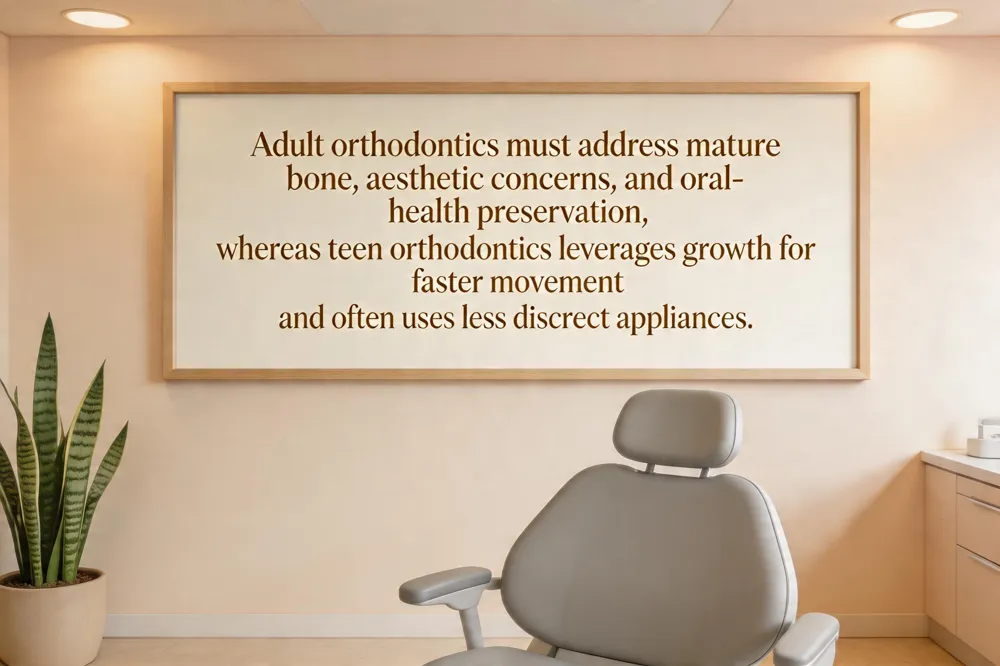 Adult orthodontics treats patients 18 years and older, correcting crowding, bite issues, and age‑related wear while focusing on both function and a discreet, confidence‑boosting appearance. Because adult bone is fully mature, tooth movement can be slower and requires precise, technology‑driven planning (3‑D scanning, CAD/CAM) to predict outcomes and minimize discomfort. Aesthetic goals are paramount; options such as clear ceramic braces, lingual braces, or virtually invisible clear aligners (e.g., Invisalign) are chosen to blend with professional settings. Teen orthodontics, by contrast, works with growing skeletal structures, allowing faster movement, broader use of traditional metal brackets, and less emphasis on concealment. Teens often need guidance for eruption and bite development, whereas adults prioritize oral‑health preservation, speech, chewing, and a subtle look.
Before selecting braces, an adult should consider aesthetic preference (clear vs. metal), lifestyle compatibility (wear compliance, dietary restrictions), treatment length, cost, and specific dental concerns such as overbites, underbites, or jaw alignment. A personalized consultation at Trielle Orthodontics can match these factors to the optimal discreet appliance.
Adult orthodontics treats patients 18 years and older, correcting crowding, bite issues, and age‑related wear while focusing on both function and a discreet, confidence‑boosting appearance. Because adult bone is fully mature, tooth movement can be slower and requires precise, technology‑driven planning (3‑D scanning, CAD/CAM) to predict outcomes and minimize discomfort. Aesthetic goals are paramount; options such as clear ceramic braces, lingual braces, or virtually invisible clear aligners (e.g., Invisalign) are chosen to blend with professional settings. Teen orthodontics, by contrast, works with growing skeletal structures, allowing faster movement, broader use of traditional metal brackets, and less emphasis on concealment. Teens often need guidance for eruption and bite development, whereas adults prioritize oral‑health preservation, speech, chewing, and a subtle look.
Before selecting braces, an adult should consider aesthetic preference (clear vs. metal), lifestyle compatibility (wear compliance, dietary restrictions), treatment length, cost, and specific dental concerns such as overbites, underbites, or jaw alignment. A personalized consultation at Trielle Orthodontics can match these factors to the optimal discreet appliance.
Traditional Braces vs. Invisalign: When to Choose Each
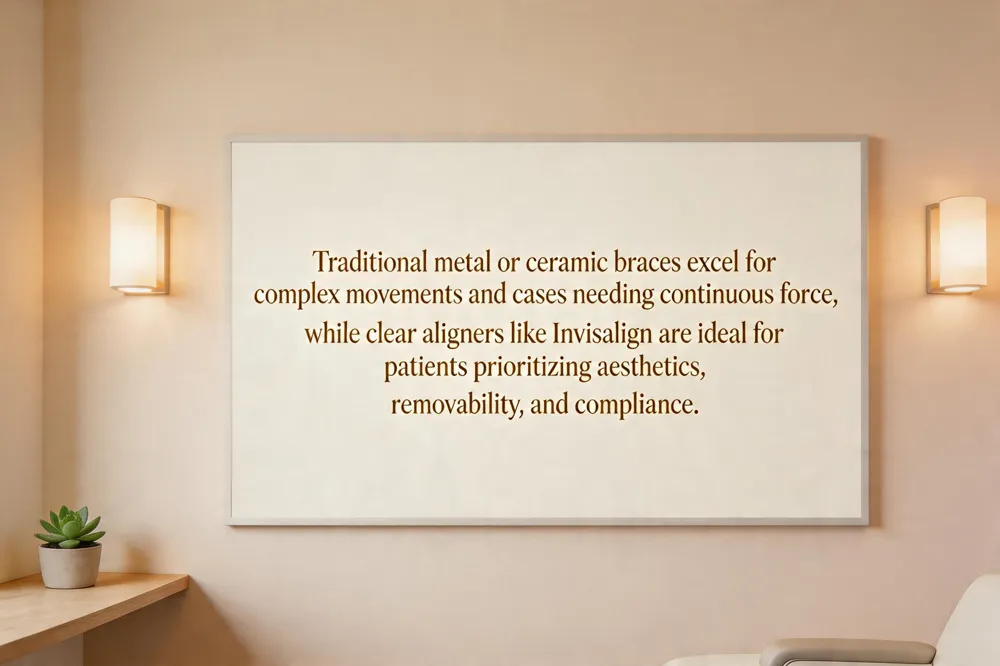 Traditional brace and clear aligners each have distinct advantages for adult patients. A dentist may favor fixed braces when the case involves severe crowding, deep overbites, or complex rotations that demand precise force. Braces work 24/7 without relying on patient compliance, allow quick adjustments with elastics or springs, and can be more cost‑effective for intricate movements. They are reliable for adults whose lifestyle makes wearing aligners **20‑22 hours](https://www.invisalign.com/) a day difficult.
Clear aligners, such as Invisalign, are virtually invisible and removable, simplifying eating and oral hygiene while reducing soft‑tissue irritation. Their aesthetic appeal and flexibility attract professionals who seek discretion. However, success depends on wear time, and they may be pricier than metal braces. Metal braces—whether stainless‑steel or tooth‑colored ceramic—are durable, handle a range of bite corrections, and cost less, but they are visible, require dietary restrictions, and can cause gum soreness. The optimal choice balances treatment complexity, lifestyle, budget, and aesthetic preference.
Discreet and Invisible Brace Options
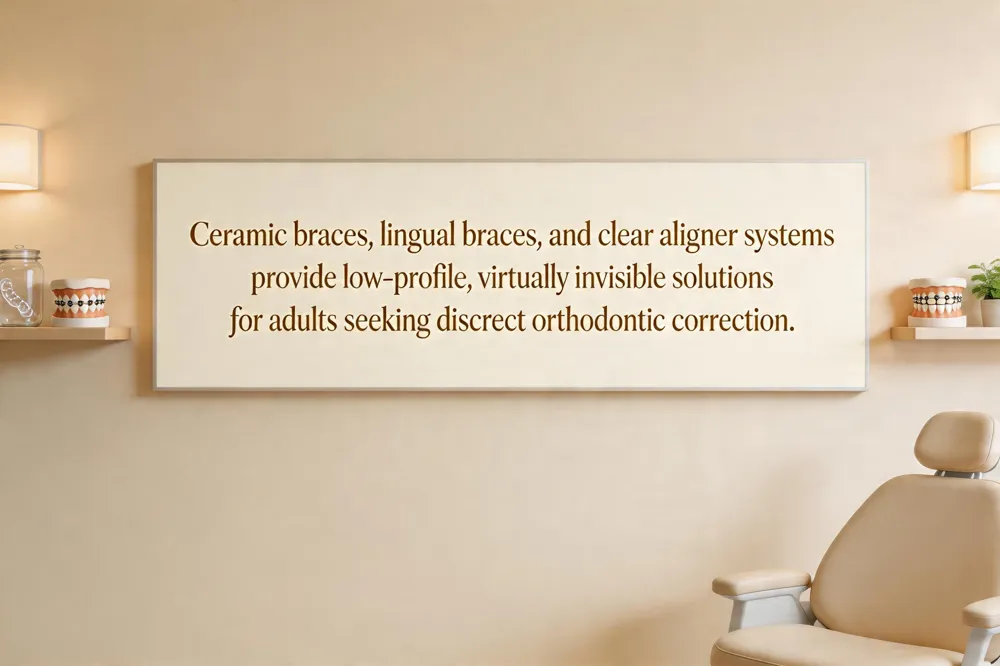 Adults today can choose discreet or virtually invisible orthodontic options that fit modern lifestyles. Ceramic (clear) braces use tooth‑colored brackets and wires, delivering the power of metal braces while blending with natural tooth shade. Lingual braces are bonded to the inner tooth surfaces, making the appliance completely hidden. Clear aligner systems like Invisalign employ transparent, removable trays worn 20–22 hours daily and removable for meals or events.
Are there discreet brace options for adults? Yes. Ceramic braces, lingual braces, and clear aligners each provide a low‑profile solution that still moves teeth effectively.
Are there any invisible brace options for adults? Yes—Invisalign aligners are virtually invisible; ceramic brackets are tooth‑colored, and lingual braces sit behind the teeth, rendering them unseen. Trielle Orthodontics in Union, NJ customizes each option using digital 3‑D planning and flexible financing and personalized care.
Cost, Duration, and Long‑Term Stability
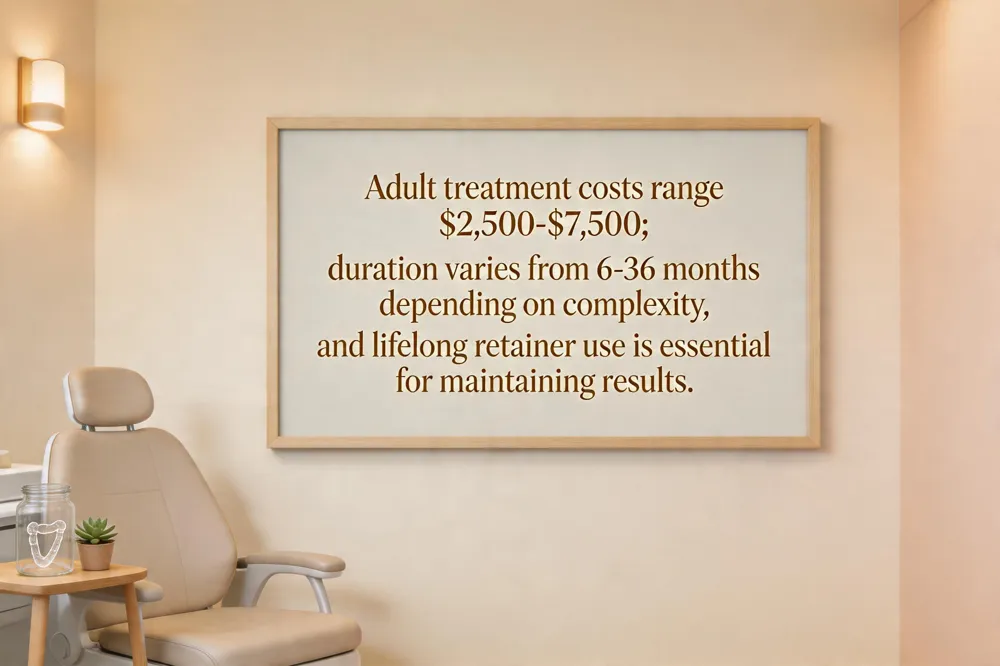 In Union, NJ adult orthodontic care typically costs $2,500‑$7,500 depending on the appliance. Clear aligners (e.g., Invisalign) run $2,500‑$7,000, ceramic braces $4,000‑$6,500, and traditional metal braces $3,500‑$5,000; Trielle Orthodontics offers flexible financing and insurance coordination. Treatment length varies with case complexity: simple spacing or a single mis‑aligned tooth may finish in as little as 6 months, while comprehensive bite corrections can require 12‑36 months. Metal braces or ceramic braces often move teeth faster than lingual braces, and clear aligners usually resolve mild issues in 6‑12 months but may take up to 24 months for extensive work. After active treatment, a retainer—either removable or fixed—is essential for long‑term stability; most adults wear a nighttime retainer indefinitely to prevent relapse. Consistent retainer use, good oral hygiene, and regular check‑ups keep the smile stable for years, and in some cases orthodontic correction can also improve airway space, helping alleviate obstructive sleep apnea.
Lifestyle, Comfort, and Everyday Considerations
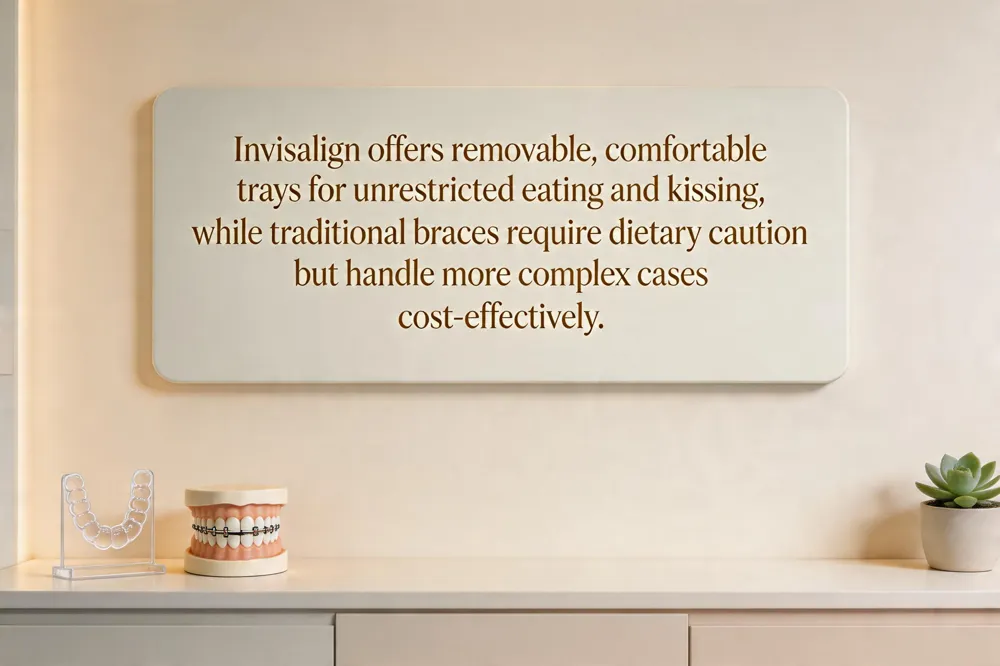 Can I kiss comfortably while wearing Invisalign? Yes—its smooth, flexible trays fit snugly, don’t scrape lips, and are invisible; you can briefly remove them for extended intimacy, but keep them on 20‑22 hours daily.
What are the differences between Invisalign and traditional braces for adults? Invisalign offers near‑invisible, removable trays, fewer food restrictions, and easier cleaning; traditional braces are fixed, more visible, handle complex cases better, and are often cheaper.
Technology, Education, and the Future of Adult Orthodontics
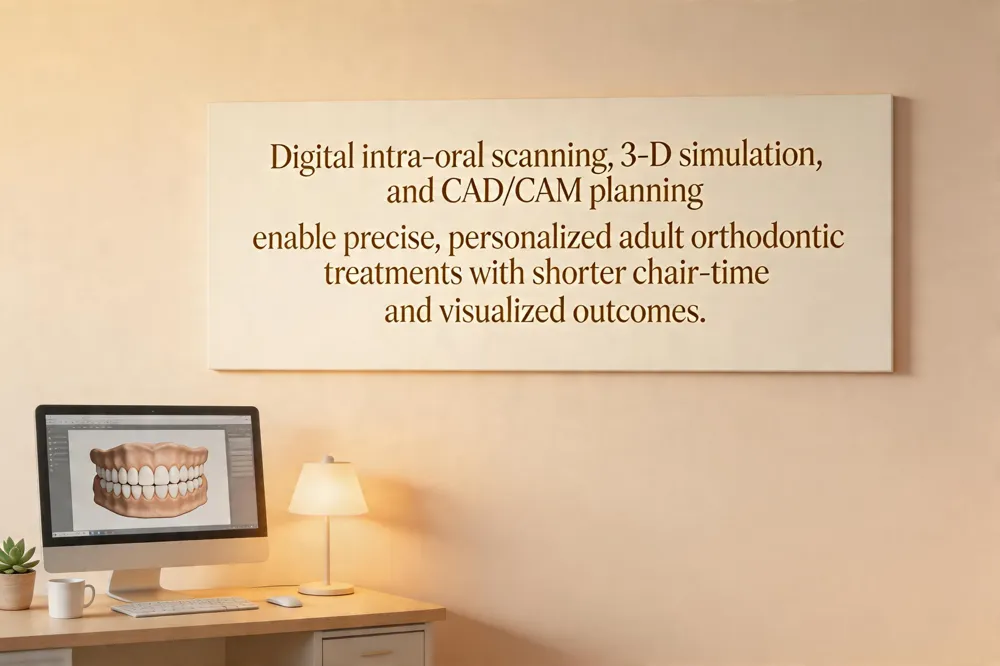 Modern adult orthodontics relies on digital scanning and 3‑D treatment simulation to create precise, personalized plans. At Trielle Orthodontics in Union, NJ, intra‑oral scanners capture a virtual model of the patient’s teeth, which is then used with CAD/CAM software to preview the final smile and map each tooth’s movement. This technology shortens chair‑time, improves accuracy, and lets patients see expected results before treatment begins. After active tooth movement, retention is essential; most adults wear a removable or fixed retainer indefinitely to keep the corrected bite stable. Retainers are custom‑fabricated from digital impressions, ensuring a comfortable fit that encourages consistent use.
What should an adult consider before choosing braces? Aesthetic preference (clear vs metal), lifestyle compatibility (wear compliance), treatment length, cost, and specific dental issues such as bite problems or jaw alignment. A consultation at Trielle Orthodontics provides a tailored plan addressing all these factors.
Your Discreet Path to a Confident Smile
At Trielle Orthodontics in Union, NJ we combine modern comfort features with cutting‑edge digital tools to deliver discreet adult orthodontics. Using 3‑D intra‑oral scans, CAD/CAM design and treatment‑simulation tablets, we create a precise, individualized plan that predicts the final smile before any appliance is placed. Our options—clear aligners (Invisalign), tooth‑colored ceramic brackets (LightForce Clear Braces) and hidden lingual braces (InSmile)—are chosen for aesthetic invisibility, gentle forces and removable convenience when possible. Advanced low‑profile brackets, Smartwire technology and self‑ligating systems further reduce irritation and office visits. Ready to start? Call (718) 565‑7242, complete our online request form, or stop by our office for a free initial consultation. We'll discuss your goals, budget and financing, then schedule your personalized treatment plan. You’ll also receive a digital preview of your future smile, helping you make an informed decision.