A Modern Outlook on Adult Orthodontics
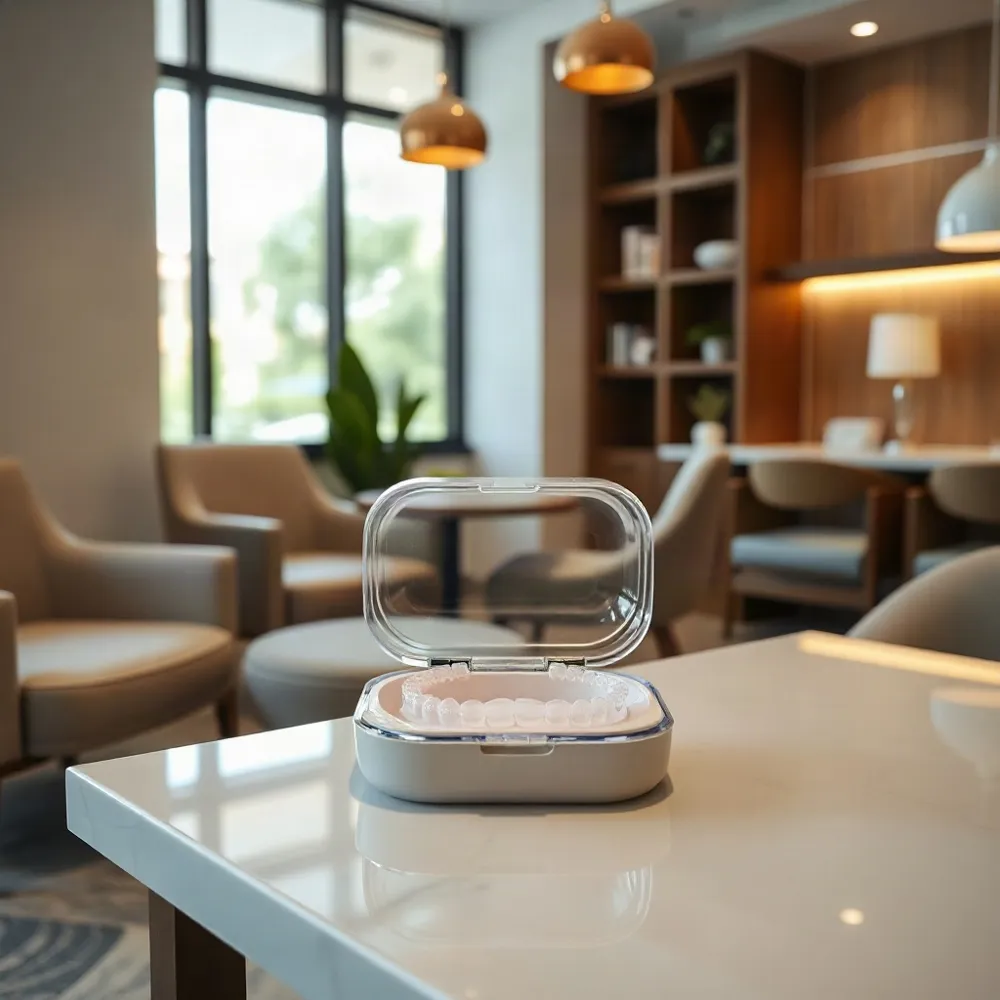
One in five orthodontic patients are adults, reflecting a growing demand for mature smile solutions. Professionals increasingly seek discreet appliances that preserve confidence at work and social events. Trielle Orthodontics embraces this trend by prioritizing comfort, using digital 3‑D scanning, custom treatment planning, and gentle materials such as clear aligners, tooth‑colored ceramic braces, and hidden lingual systems. The practice’s flexible financing, insurance coordination, and emphasis on patient education ensure each adult can achieve a healthier bite and a natural‑looking smile without compromising lifestyle. Before starting, a gum‑health assessment is performed to prevent complications, and retainers are provided to maintain results long‑term.
Why Adults Choose Orthodontic Treatment
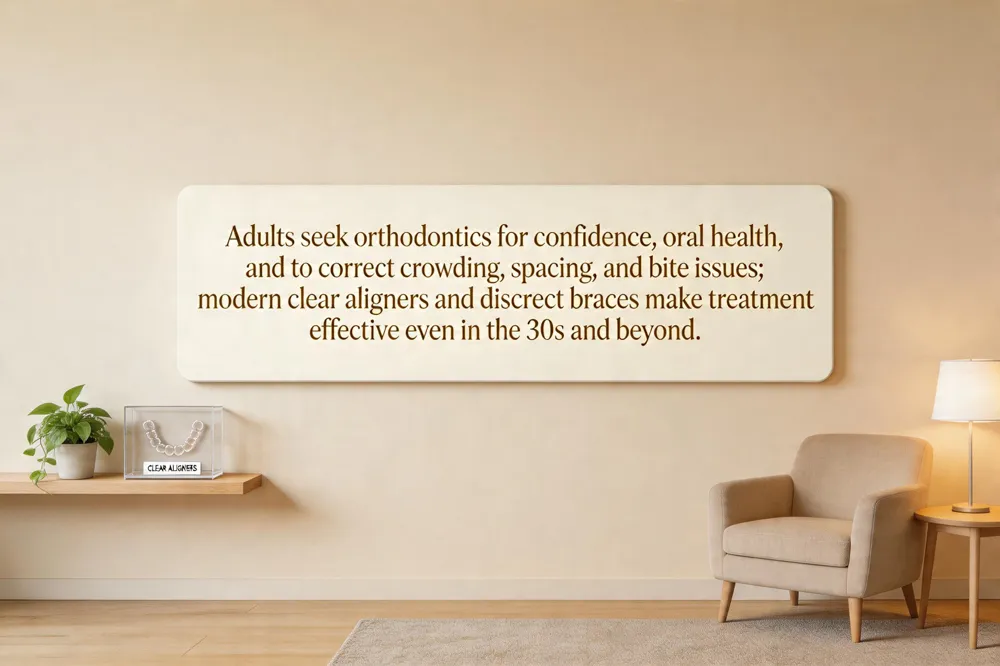 One in five orthodontic patients are adults, and many seek treatment to boost smile confidence, improve oral health, and correct common issues such as crowding, spacing, overbite, underbite, and bite problems.
Is 34 or 35 too old for braces? No – adults in their thirties can still move teeth efficiently; modern clear aligners or discreet ceramic braces give excellent results, though treatment may be a bit longer than in teens.
Adult braces options for older adults include traditional metal braces, tooth‑colored ceramic braces, lingual braces placed on the tongue side, and removable clear aligners like Invisalign. Mini‑braces offer a low‑profile alternative.
Adult orthodontics cost at Trielle Orthodontics typically ranges from $4,000 to $9,000, with $2,000‑$4,000 out‑of‑pocket after insurance; flexible 0 % financing spreads payments over 12‑36 months.
Adult braces before and after – before treatment we document bite and aesthetics; after removal patients enjoy a straighter bite, improved facial symmetry and better oral hygiene, maintained with a retainer.
Discreet Fixed Appliances: Ceramic, Lingual, and Self‑Ligating Braces
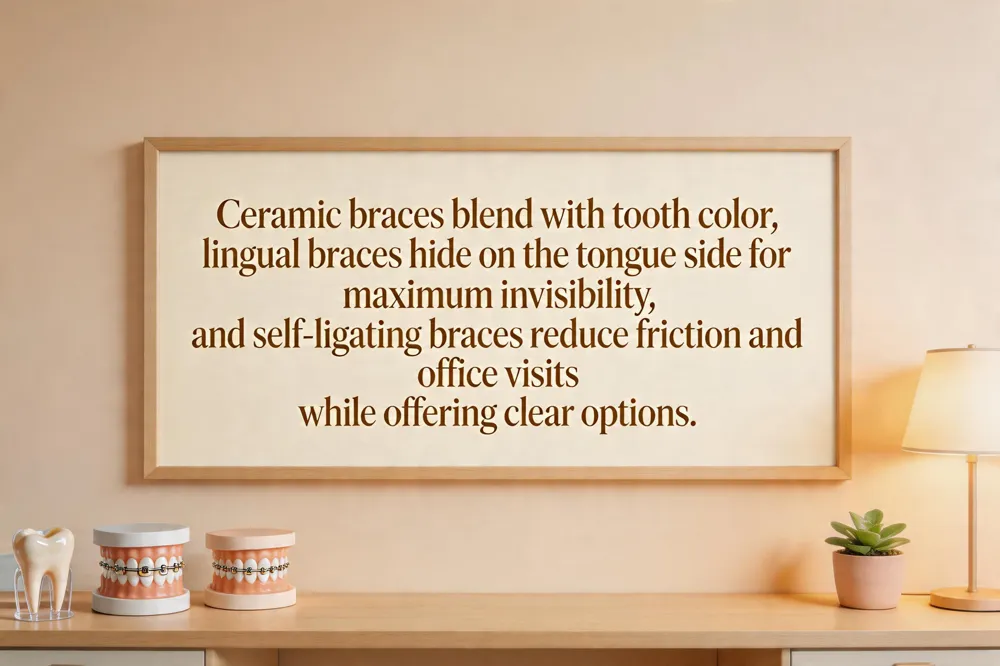 Lingual braces are bonded to the back (lingual) side of the teeth, making them virtually invisible from the front. This option is popular with professionals who want discretion. Because the brackets sit close to the tongue, patients may experience an initial lisp or tongue irritation, and cleaning can be more demanding. Treatment often lasts 18‑36 months and costs more than metal or ceramic braces.
Self‑ligating braces eliminate elastic ties by using a built‑in clip, reducing friction and often shortening treatment time. They require fewer office visits, are available in clear ceramic versions for added aesthetics, and make oral hygiene easier.
Choosing the right discreet option depends on your aesthetic preference, comfort tolerance, treatment complexity, and budget. Ceramic braces balance visibility and durability; lingual braces offer maximum concealment at higher cost and possible tongue discomfort; self‑ligating braces provide efficiency with moderate visibility. Consult with an orthodontist to match the appliance to your lifestyle and orthodontic goals.
Clear Aligners: Invisalign, ClearCorrect, and Market Alternatives
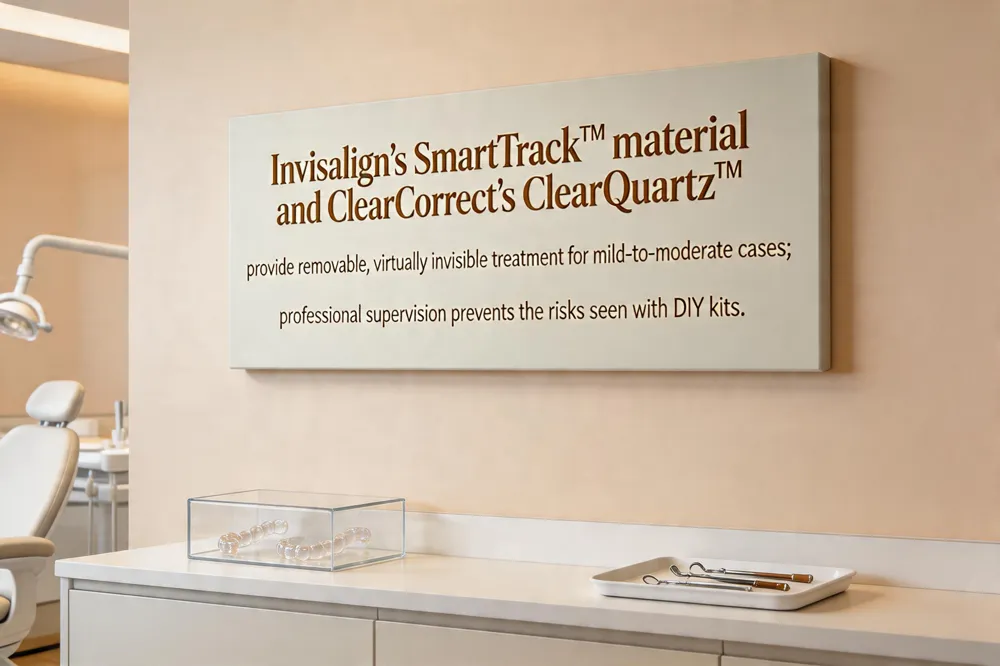 Clear aligners have become the go‑to discreet option for adults seeking a confident smile without the metal of traditional braces.
Invisalign technology and SmartTrack material – Invisalign uses patented SmartTrack™ polyurethane, shaped by 3‑D digital imaging, to apply gentle, continuous forces.
The system can correct mild to moderate misalignments in 12‑18 months, often faster than fixed braces, and the trays are removable for eating and oral hygiene.
ClearCorrect and other brands – ClearCorrect® employs ClearQuartz™ material and a performance trimline for comfort and durability. Like Invisalign, it requires a series of custom trays and professional monitoring, making it suitable for adult cases involving crowding, gaps, or bite issues.
Byte aligners controversy – Byte marketed DIY kits without orthodontist oversight and now faces litigation over alleged injuries and false advertising. Professionals caution that unsupervised aligner use can lead to bite problems and gum recession.
Cost, insurance, and patient reviews – Adult clear‑aligner treatment typically ranges from $1,800 to $8,100 nationally; Invisalign averages $5,000‑$7,000, while ClearCorrect is comparable. Many dental plans cover part of the expense, and FSAs/HSA funds can offset out‑of‑pocket costs. Reviews highlight the aesthetic advantage, comfort, and ease of cleaning, but stress the importance of qualified orthodontist supervision for safe, predictable results.
Financial Aspects: Costs, Insurance, and Financing
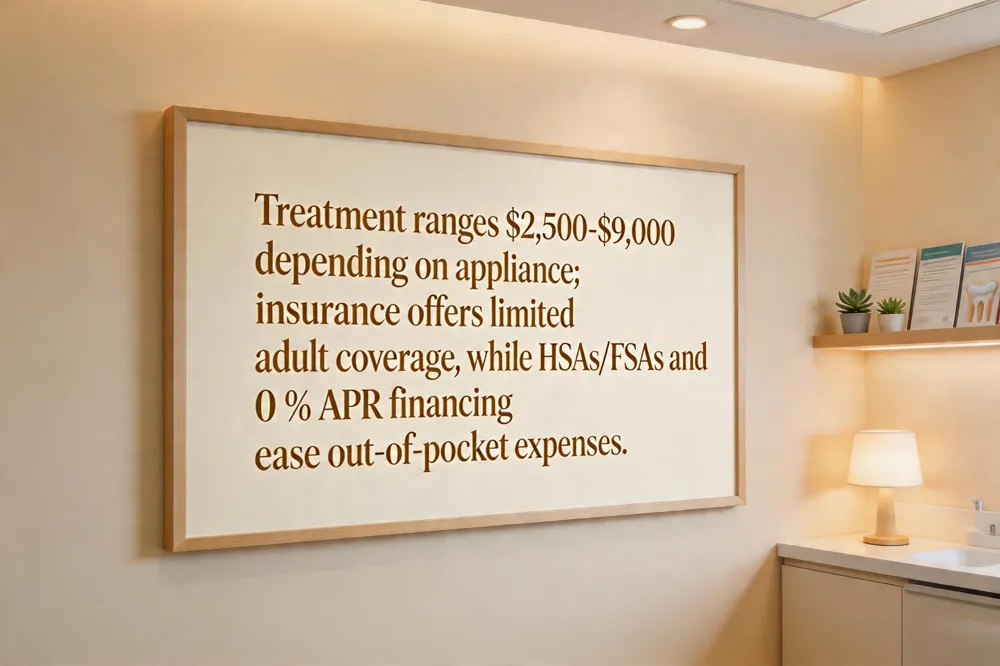 Adult orthodontic treatment costs vary by appliance type and case complexity. Traditional metal braces usually start around $2,500 and can rise to $7,000, while tooth‑colored ceramic braces are slightly higher. Clear‑aligner systems such as Invisalign typically range from $3,000 to $7,000, with some providers offering entry‑level pricing near $2,500. Insurance coverage for adults is limited; many dental plans provide a modest lifetime maximum or a percentage of the cost if the case is deemed medically necessary. Patients can use Health Savings Accounts (HSAs) or Flexible Spending Accounts (FSAs) to offset out‑of‑pocket expenses. Most practices, including Trielle Orthodontics in Union, NJ, offer flexible financing—monthly payment plans, 0 % APR options, and discounts for upfront payment. Aspen Dental likewise provides a range of orthodontic options with financing and same‑day appointments. Retainers after treatment typically cost $300–$600, often covered partially by insurance. For a precise quote and to verify your plan’s benefits, schedule a complimentary consultation with a qualified orthodontist.
Choosing Between Braces and Aligners
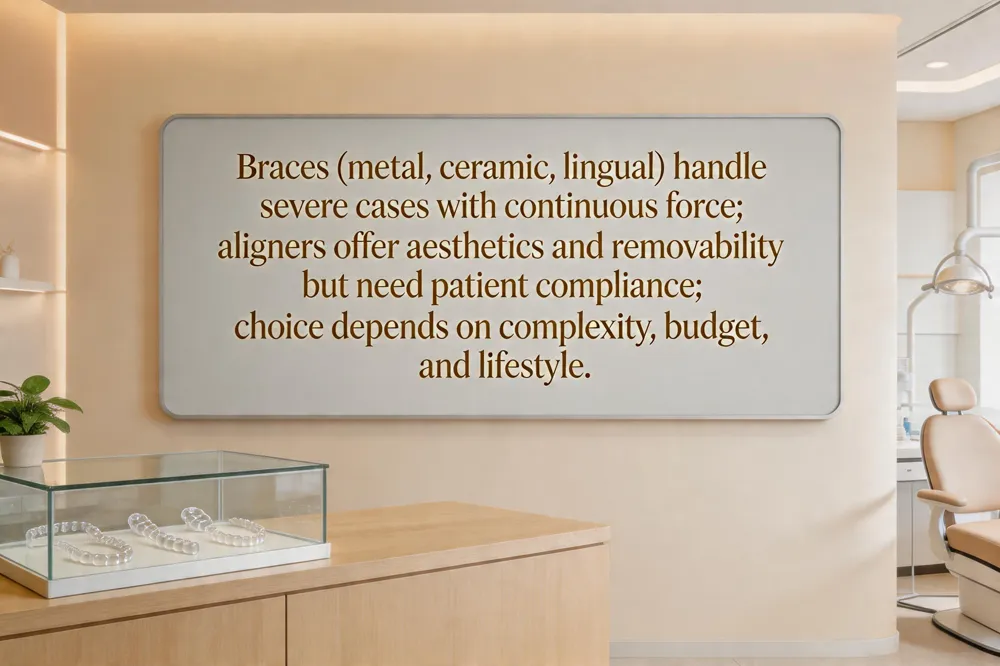 Adult orthodontic care balances aesthetics, lifestyle, case complexity, and office visits.
Aesthetic differences – Metal braces are visible; ceramic brackets blend with tooth color; lingual brackets hide on the tongue side; clear aligners (e.g., Invisalign) are virtually invisible.
Lifestyle impact and compliance – Aligners are removable for meals and oral hygiene, requiring 20‑22 hours daily wear. Braces stay on continuously, demanding dietary restrictions and diligent brushing around brackets.
Complexity of cases each can treat – Fixed appliances (metal, ceramic, lingual) handle severe crowding, deep bites, and large rotations. clear aligners effectively correct mild‑to‑moderate issues but may need supplemental attachments for tougher movements.
Appointment frequency and maintenance – Braces need adjustments every 4‑8 weeks; aligners usually involve check‑ins every 6 weeks.
Adult braces vs Invisalign – Both straighten teeth reliably; Invisalign offers discreet, removable treatment but depends on patient discipline, while braces provide continuous force with more frequent visits.
Invisalign vs braces – Invisalign is invisible and diet‑free; braces are more robust for complex bites.
Teeth aligners vs braces – Aligners are removable and aesthetic; braces are fixed and visible.
Adult braces at home – DIY kits lack professional oversight, risking gum disease and improper tooth movement; licensed orthodontists ensure safety and optimal results.
Braces alternative for adults – Options include clear aligners, ceramic braces, lingual braces, and self‑ligating systems, each tailored to personal goals and budget.
Best adult braces options – Metal (most affordable), ceramic (aesthetic), lingual (hidden), self‑ligating (fewer visits), and clear aligners (removable) cover the full spectrum of adult needs.
Lifestyle Details: Comfort, Maintenance, and Special Cases
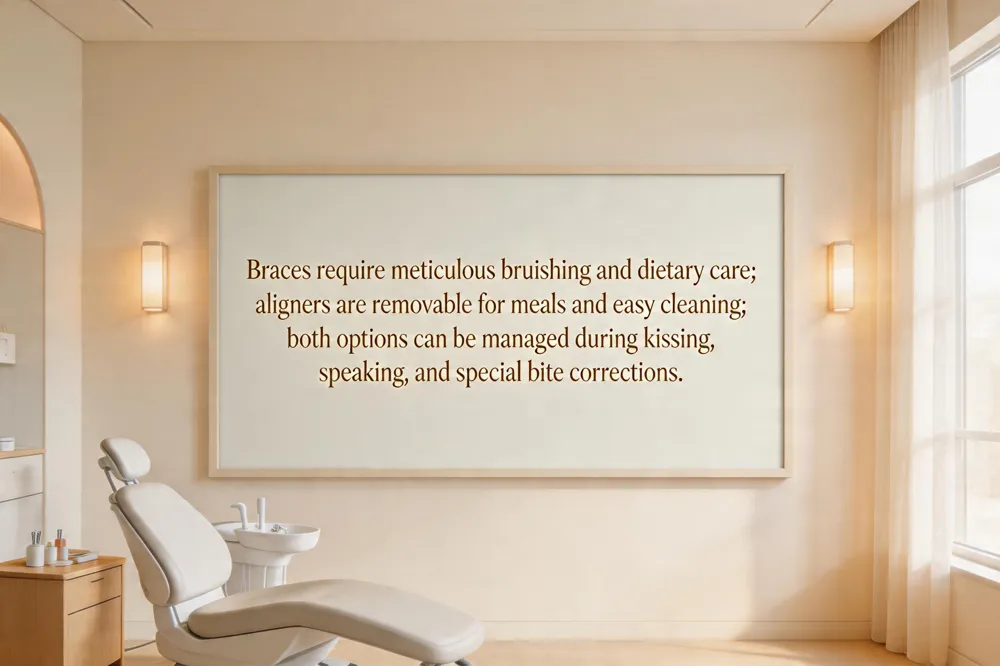 Keeping your mouth clean is essential whether you wear fixed braces or removable aligners. With braces, brush twice daily around brackets and use floss threaders or a water‑flosser; with aligners, remove them for meals, brush the teeth, and rinse the trays before putting them back. Speech may be briefly altered by lingual braces or bulky aligners, but most patients adapt within a few days; choosing a smooth, tooth‑colored bracket or a low‑profile aligner can reduce tongue irritation. Romantic moments are not a barrier—"Can I kiss my boyfriend with Invisalign?" Yes, the clear trays are smooth and virtually invisible; you can keep them in for a natural kiss or briefly remove them if you prefer. For bite issues, "What aligners are best for overbite?" Invisalign and ClearCorrect offer precise digital planning and attachments to close mild‑to‑moderate overbites, while severe cases may need a hybrid approach with auxiliary appliances. Finally, "Will braces be covered for TMJ?" Coverage is possible when the treatment is medically necessary to treat TMJ dysfunction, but it requires documentation and prior authorization; otherwise, flexible financing is available.
Your Journey at Trielle Orthodontics
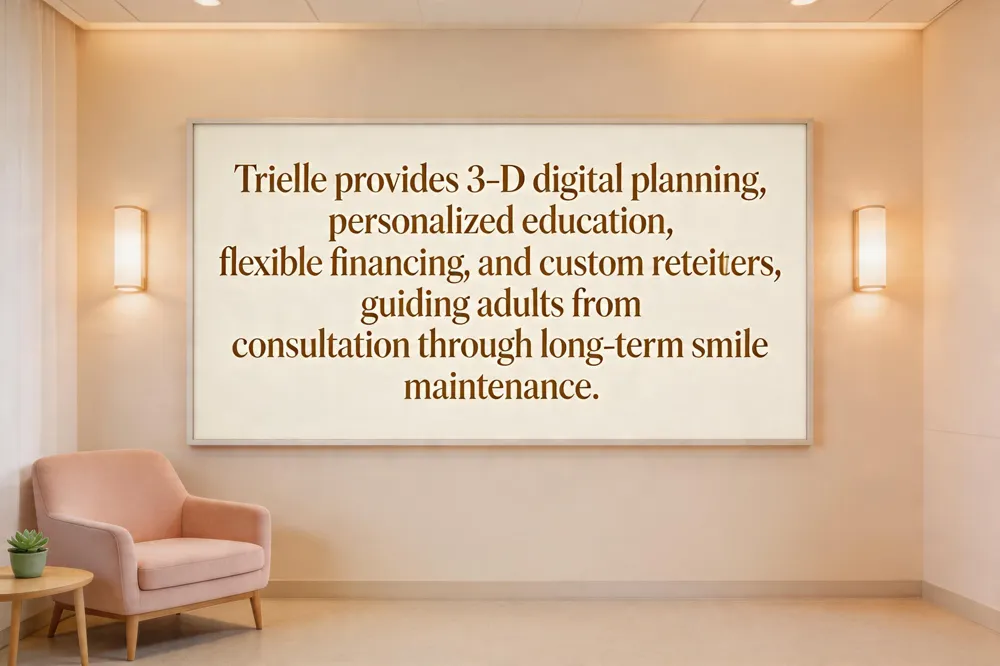 Personalized consultation and 3‑D digital planning
At Trielle Orthodontics every adult begins with a comprehensive exam, intra‑oral scan and 3‑D treatment simulation. This digital blueprint lets the orthodontist map precise tooth movements and show you the expected smile before any appliance is placed.
Patient education and comfort focus
We spend time explaining each discreet option—ceramic braces, clear aligners, lingual braces—highlighting hygiene, wear schedules and what to expect during the first weeks. Comfort‑enhancing features such as smooth‑edge aligners and low‑profile brackets are built into every plan.
Flexible financing and insurance coordination
Trielle works with most dental insurers, HSAs/FSAs and offers 0% APR payment plans, making the $2,500‑$8,000 range for adult treatment manageable for any budget.
Post‑treatment retainers and long‑term care
After your teeth are aligned, custom retainers are provided and a maintenance schedule is set to preserve results for life.
Adult Braces book
"Adult Braces: Driving Myself Sane” is a memoir by Lindy West that chronicles a cross‑country road trip she undertook to recover from a personal crisis and rediscover herself. The book blends humor and raw honesty as West reflects on the aftermath of her success, a painful marriage breakup, and a deep depressive episode. Through vivid storytelling, she explores themes of self‑acceptance, resilience, and the challenges of navigating adult life and relationships. West’s candid voice offers both comic relief and poignant insight, making the memoir both entertaining and inspiring. The title plays on the orthodontic term “adult braces,” symbolizing the need for corrective work and support at any stage of life.
What is the best type of braces for adults?
The most popular choice for adults is a discreet option that blends with the natural tooth color, such as ceramic (clear) braces or clear‑aligner systems like Invisalign or ClearCorrect. Ceramic braces use tooth‑colored brackets and clear elastics, offering the same effectiveness as metal braces while being far less noticeable. Clear aligners are removable, virtually invisible, and tend to cause less irritation to the lips and cheeks, making them ideal for most mild‑to‑moderate alignment issues. For patients who need the highest level of invisibility and are willing to tolerate a slightly more uncomfortable feel, lingual braces—mounted on the back of the teeth—are an alternative. Complex bite problems or severe crowding may still require traditional metal braces, but for the majority of adult patients, ceramic braces or clear aligners provide the best balance of aesthetics, comfort, and effectiveness.
Embrace a Discreet, Confident Smile Today
Trielle Orthodontics tailors each adult plan to the patient’s smile goals, dental history, and lifestyle, ensuring a truly personalized experience. The practice employs digital 3‑D scanning, computer‑aided treatment planning, and custom‑fabricated appliances—whether ceramic brackets, lingual systems, or clear aligners—to maximize comfort while remaining discreet. To make orthodontics accessible, Trielle offers flexible payment plans, accepts HSAs/FSA accounts, and works with many insurance carriers to apply adult orthodontic benefits, reducing out‑of‑pocket costs. Throughout care, the team emphasizes precise tooth movement, regular monitoring, and a retainer protocol, guaranteeing that the confident, invisible smile endures long after treatment and ongoing oral health support today.