The Digital Leap in Orthodontics
BiteScan is a high‑resolution intra‑oral digital scanner that records a patient’s bite in real time. Using an optical sensor and AI‑driven algorithms, the device captures the exact position of the upper and lower arches while the patient closes naturally, producing a precise 3‑D model of occlusion in just a few seconds. The scan is painless, eliminates traditional impression trays, and instantly uploads the data to cloud‑based software for analysis and treatment planning. Trielle Orthodontics in Union, NJ chose BiteScan because its rapid, accurate bite registration aligns with the practice’s focus on comfort, modern technology, and individualized care. The technology shortens chair time, improves diagnostic precision, and enables custom clear‑aligner and bracket designs that enhance treatment efficiency and patient satisfaction.
LightForce Braces Compared With Invisalign
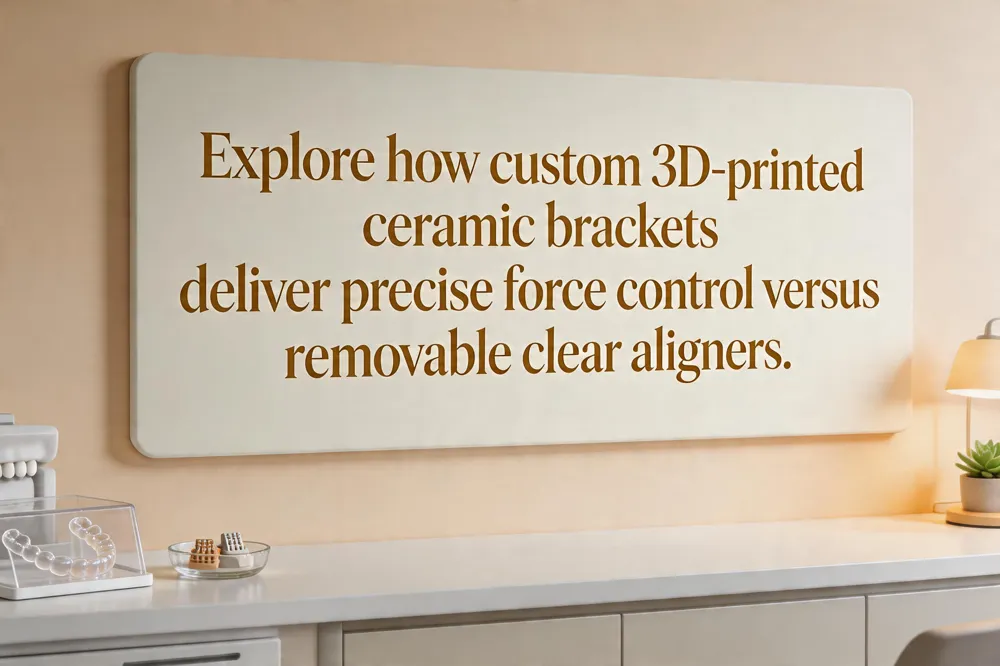 LightForce braces employ custom‑designed 3D‑printed ceramic brackets that are fabricated to match the exact morphology of each tooth. This level of personalization gives orthodontists precise control over force vectors, allowing complex movements such as severe rotations, vertical adjustments, and intricate bite corrections that are difficult to achieve with aligners. The ceramic material is tooth‑colored and smoother than metal, offering a more aesthetic appearance while still being a fixed appliance.
In contrast, Invisalign relies on a series of clear, removable aligners that are virtually invisible and can be taken out for meals and oral hygiene. This makes Invisalign highly appealing for patients prioritizing aesthetics and convenience, especially for mild‑to‑moderate cases. However, the aligner’s thickness limits the magnitude of force that can be applied, which can reduce efficiency for severe crowding or complex occlusal issues. Moreover, treatment success hinges on patient compliance—wearing the aligners at least 22 hours a day—making it less reliable for those with inconsistent habits.
Clinics such as Trielle Orthodontics in Union, NJ, often recommend LightForce for challenging cases that demand precise, three‑dimensional force control, while reserving Invisalign for patients seeking a discreet, removable solution for simpler corrections.
Custom Braces, Regular Braces, and BiteScan Integration
 What is the difference between custom braces and regular braces?
Custom braces are fabricated from a 3‑D intra‑oral scan (such as BiteScan or iTero) that captures the exact anatomy of each tooth. The digital model is used to 3 D‑printed ceramic brackets or personalized indirect‑bonding trays that match the contour of the patient’s arches, and to customize archwires that deliver precise, patient‑specific forces. Regular (off‑the‑shelf) braces rely on standardized brackets and wires that are manually adjusted to fit many mouths, resulting in a less exact fit.
3‑D scanning and personalized bracket design The high‑resolution BiteScan scan provides a functional occlusal record, allowing LightForce or SureSmile systems to design brackets that sit flush on the tooth surface, eliminating bulky metal edges and reducing gum irritation. This digital workflow eliminates traditional impressions, saving chair time and improving comfort.
Efficiency gains from precise force delivery Because the brackets and wires are cut to the exact tooth geometry, forces are applied more efficiently, often shortening treatment by up to 30‑40 % and reducing the number of adjustment visits. The indirect‑bonding trays further cut chair‑time by allowing rapid, accurate bracket placement.
Aesthetic options for modern patients Tooth‑colored ceramic brackets or low‑profile designs blend seamlessly with the smile, offering a discreet alternative to traditional metal braces. Trielle Orthodontics in Union, NJ pairs these aesthetic choices with flexible payment plans, ensuring patients receive a comfortable, technology‑driven orthodontic experience.
Bite Plates: Function, Comfort, and Clenching Relief
 Occlusal splints, often called bite plates, are thin, custom‑molded acrylic appliances that sit on the palate or the upper dentition. They are fabricated from a digital intra‑oral scan—such as a BiteScan or T‑Scan capture—ensuring a precise fit that distributes forces evenly across the arches. By creating a gentle separation between the upper and lower teeth, the plate allows the front teeth to erupt slightly, gradually opening a deep bite while maintaining the vertical dimension of the occlusion. This controlled separation reduces excessive load on the temporomandibular joint (TMJ) and mitigates the muscle strain that contributes to headaches, earaches, and facial discomfort.
Deep‑bite correction mechanisms rely on the plate’s ability to limit posterior contacts, encouraging the mandibular incisors to move forward and the molars to settle into a more balanced relationship. The appliance can be worn only at night or for short daytime periods, providing flexibility and comfort while orthodontic appliances such as braces or clear aligners work on the remaining tooth movements.
Management of bruxism and TMJ discomfort is enhanced by the splint’s shock‑absorbing properties. The acrylic surface cushions the teeth, interrupts the clenching reflex, and allows jaw muscles to relax, often leading to noticeable symptom relief within days.
What is a bite plate used for in orthodontics? A bite plate, also called an occlusal splint, is a removable appliance that sits on the roof of the mouth or on the upper teeth to create separation between the upper and lower arches. By preventing the back teeth from contacting each other, it allows the front teeth to erupt slightly and gradually opens a deep bite over time. The plate also helps to control the vertical dimension of the bite, reducing excessive forces on the temporomandibular joint and alleviating associated discomfort. In orthodontic treatment it can be used in conjunction with braces or aligners to stabilize the bite while other tooth movements are made. Overall, the bite plate provides a comfortable, non‑invasive way to correct deep‑bite issues and improve overall occlusion.
Does a bite plate help with clenching? Yes. A bite plate is a custom‑made acrylic appliance that covers the occlusal surfaces of the teeth, preventing them from contacting each other and thereby interrupting the clenching reflex. By absorbing a portion of the muscle force and allowing the jaw muscles to relax, it reduces the intensity and frequency of clenching episodes. The design also eases pressure on the temporomandibular joint and can lessen associated pain or migraine symptoms. Many patients notice relief within a few days of consistent wear, especially when the plate is used at night or during periods of high stress. At Trielle Orthodontics we can tailor a bite plate to your specific bite and treatment goals for optimal comfort and effectiveness.
Orthodontic Treatment Options and Bite Plane Mechanics
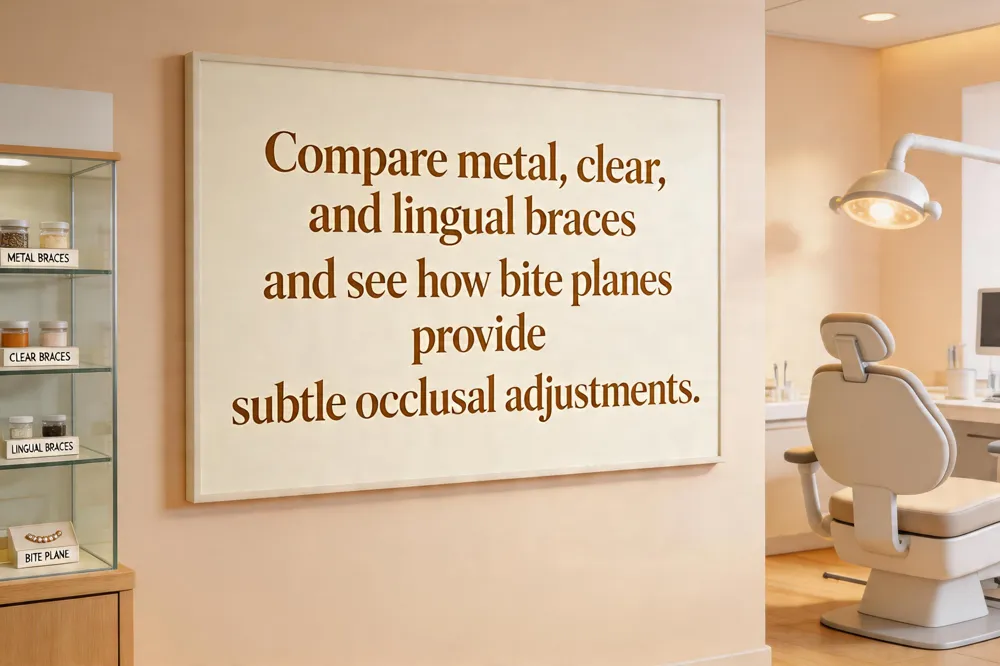 The three primary orthodontic treatment options are traditional metal braces, clear aligners such as Invisalign, and lingual braces. Metal braces use stainless‑steel brackets and wires attached to the front of the teeth to apply continuous pressure for movement. Clear aligners are a series of removable, virtually invisible trays that gradually shift teeth and can be taken out for eating and cleaning. Lingual braces are custom‑made brackets and wires placed on the backside of the teeth, making them hidden from view while functioning like conventional braces. Each option offers a different balance of aesthetics, comfort, and suitability for various bite issues.
A bite plane (or bite plate) applies gentle pressure to specific teeth or jaw areas, gradually moving teeth into proper alignment. By creating a controlled occlusal contact, the bite plane can subtly guide teeth without the need for full‑arch appliances, making it useful for minor adjustments or as an adjunct to other orthodontic devices.
Bitewing X‑rays enable early detection of cavities between teeth and under existing restorations, allowing timely treatment and preventing more invasive procedures. The high‑resolution images also help clinicians assess the health of the supporting bone and monitor the progress of orthodontic movement, ensuring that bite‑plane adjustments are made safely and effectively.
Optimizing BiteScan Workflow: From Scans to Seamless Treatment
 A smooth BiteScan workflow begins with clean data capture. Intersections—where the upper and lower arches appear to cross often arise from the periodontal ligament’s flex and captured in a static scan. Clinicians can minimize these artifacts by taking bite scans from both the of the mouth and carefully trimming soft‑tissue interference around the tuberosities and retromolar pads. When intersections persist, the Medit Occlusion Analyzer proves invaluable: it automatically flags crossing geometry, lets the user view the model from multiple angles, and offers manual correction tools. Once a reliable 3‑D occlusion is established, the data feed straight into digital treatment‑planning platforms such as LightPlan or Invisalign ClinCheck. Integrated with 3‑D‑printed appliance pipelines, the refined bite model guides the design of custom brackets, indirect bonding trays, and clear aligners, ensuring that each appliance fits the patient’s functional bite from day one and reducing the need for mid‑treatment adjustments.
A Future‑Ready Orthodontic Experience
BiteScan’s high‑resolution 3‑D intra‑oral scanning captures functional occlusion in seconds, delivering objective force‑distribution maps that pinpoint premature contacts, TMJ strain and malocclusion with millimeter accuracy. Trielle Orthodontics leverages this data, along with T‑Scan and LightForce brackets, to create fully digital, patient‑specific treatment plans that minimize chair time, eliminate messy impressions and enable real‑time adjustments. The practice’s focus on comfort—painless scans, non‑invasive sensors—and flexible payment options ensures every teen or adult can access cutting‑edge care without financial stress. Long‑term, patients enjoy more stable restorations, reduced jaw pain, fewer adjustment visits and a smile that retains its function and aesthetics for years to come.