Setting the Stage for a Healthy Smile
The American Association of Orthodontists (AAO) advises that every child receive a comprehensive orthodontic screening by age seven, when the first permanent molars and incisors are typically erupted. This early visit allows the orthodontist to spot developing bite problems—such as underbites, crossbites, crowding, or harmful oral habits—before they become entrenched. By evaluating the child's jaw growth stage, the clinician can determine whether simple monitoring is sufficient or if interceptive (growth‑phase) treatment is warranted. Interceptive therapy, often called Phase 1, uses appliances like palatal expanders, partial braces, or habit‑breaking devices to guide the jaw and create space for erupting teeth. Because the jaw bones are still pliable, these early interventions are usually short‑term, less invasive, and can dramatically simplify or even eliminate the need for extensive comprehensive orthodontics later. In short, a age‑7 check‑up sets the foundation for a healthier, more stable smile and can reduce future treatment time and cost.
Balancing the Benefits and Drawbacks of Early Orthodontics
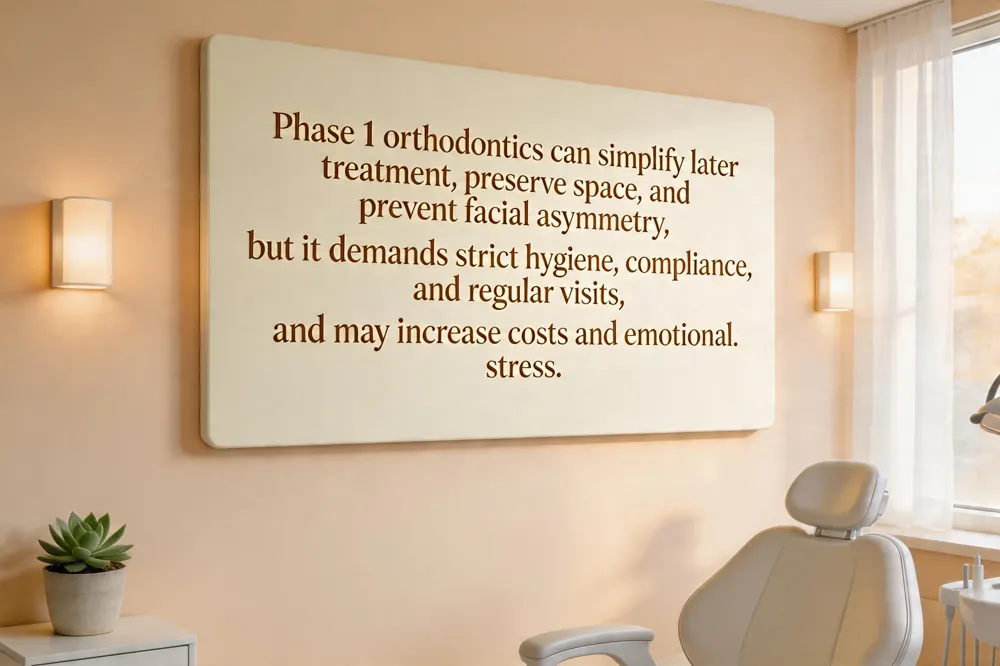 Early orthodontic (Phase 1) treatment can simplify or even eliminate the need for more extensive braces later by correcting problems while the jawbones are still soft and the teeth have short roots. It helps preserve space for permanent teeth, resolves crossbites and severe crowding, and can prevent facial asymmetry, injury, and the psychosocial effects of protruding teeth. The typical Phase 1 course lasts 10‑15 months, followed by a brief retention period before any later (Phase 2) work, often reducing the overall treatment time. However, it requires diligent oral‑hygiene supervision, consistent compliance with appliances, and regular office visits, which can be challenging for busy families and younger children.
Cons include emotional frustration for children who may feel self‑conscious about wearing braces or aligners, added parental stress over appointments and costs, the risk of over‑treatment, and higher out‑of‑pocket expenses. Compliance issues can lead to appliance damage or relapse.
Reddit users echo that Phase 1 isn’t mandatory for every child, but many agree an early evaluation (age 6‑7) can spot problems—severe crowding, cross‑bites, under‑ or over‑bites—that are easier to treat while the jaw grows. For kids with mostly straight teeth, a “wait‑and‑see” approach with regular check‑ups is often suggested. The decision should be based on an individual assessment by a qualified orthodontist.
When and How to Start: Timing and Dentition Considerations
 The American Association of Orthodontists (AAO) recommends that every child receive an orthodontic screening by age 7. At this point enough permanent molars and incisors have erupted to assess bite, jaw growth, and space for emerging teeth. Early evaluation catches problems—crossbites, crowding, thumb‑sucking, or missing teeth—before they worsen, often allowing a brief interceptive phase that uses palatal expanders or removable appliances.
What age does orthodontic treatment start? An initial evaluation is advised at 7 years; definitive braces or clear aligners usually begin once most primary teeth are lost (ages 8‑14), but interceptive treatment may start earlier if a developing issue is identified.
How early can orthodontic treatment start? It can begin in the mixed‑dentition stage, around 7‑8 years, when the first permanent front teeth erupt. Some clinicians even intervene during the primary dentition (2‑6 years) for habit‑breaking or space‑maintaining needs.
Which dentition can be involved? Interceptive care may be applied during primary, mixed, or early permanent dentition, depending on the malocclusion and growth timing.
Early evaluation therefore provides a baseline, guides growth, and often reduces the complexity, duration, and cost of later comprehensive orthodontic treatment.
Choosing the Right Appliance: Expanders, Braces, and Aligners
 Palatal expanders work best while the mid‑palatal suture is still pliable—generally between ages 7 and 14. By late adolescence the suture fuses, making conventional expansion difficult and often requiring surgical assistance. For an 8‑year‑old, the window is ideal: if the child shows crowded or overlapping teeth, a crossbite, chronic mouth‑breathing, chewing or speech difficulties, early loss of baby teeth, or jaw asymmetry, an expander can create space, guide jaw growth, and prevent more invasive treatment later. The appliance is worn 4–6 months, feels like gentle pressure, and is not painful. Early braces—partial or full—are often used after expansion to fine‑tune alignment and can be comfortably managed with modern, low‑profile brackets.
Does my 8 year old really need an expander? An expander is often recommended for children between ages 6 and 12 while the upper jaw is still growing, and an 8‑year‑old falls right in that window. Look for signs such as crowded or overlapping teeth, a crossbite where the upper teeth sit inside the lower ones, chronic mouth‑breathing, difficulty chewing or speaking, unusually early or late loss of baby teeth, or jaw asymmetry. If any of these indicators are present, an expander can create the space needed for proper tooth alignment and help prevent more invasive treatment later on. The device is typically worn for 4–6 months and may cause mild pressure initially, but it is not painful. Schedule a free consultation at Trielle Orthodontics so our team can evaluate your child’s bite and determine whether an expander is the right step for a healthy, confident smile.
Palate expander age limit Palate expanders work best when the upper jaw’s two bone plates are still separated, which typically occurs between ages 7 and 14 when the mid‑palatal suture has not yet fused. By the late teens (around 16‑18 years), that suture usually fuses into a single solid bone, making conventional expansion much harder and often ineffective. Patients older than this can still achieve a wider arch, but it usually requires advanced techniques such as surgically‑assisted expansion or modern orthodontic appliances that target the teeth rather than the bone. At Trielle Orthodontics in Union, NJ we evaluate each patient’s skeletal maturity and offer personalized treatment plans—whether a traditional expander, a surgical option, or clear‑aligner therapy—to safely and comfortably address crowding, crossbites, or airway concerns. Our team also provides thorough education and flexible financing so that teens and adults alike can make informed decisions about expanding their palate.
Navigating Treatment Plans, Costs, and Transfers
 Transferring orthodontic care
Moving your case to Trielle Orthodontics is simple: ask your current provider to send all records—X‑rays, scans, and notes. Bring any existing appliances to your first visit. Our team reviews the data, aligns the treatment plan with your progress, and discusses any remaining fees and flexible payment options so the transition is seamless.
Limited orthodontic treatment
For isolated issues—like a single crooked tooth, a small gap, or mild crowding—Trielle offers targeted solutions with clear braces, ceramic brackets, or custom aligners. These procedures typically last 3‑9 months, cost less than full‑mouth therapy, and preserve overall bite function while delivering noticeable cosmetic improvement.
Comprehensive orthodontic treatment
Full‑mouth orthodontics aligns all teeth and corrects bite and jaw relationships. Using braces or clear aligners with 3‑D digital planning, treatment runs 12‑24 months. Trielle coordinates any needed adjunctive care and provides transparent financing and insurance guidance.
Is $6000 too much for braces?
$6,000 sits near the national median for comprehensive treatment ( $3,000‑$10,000). Cost varies by appliance type, case complexity, and insurance coverage. Trielle offers modern, comfortable options and flexible payment plans to make the investment manageable.
Beyond the Smile: Health, Confidence, and Sleep
 Early interceptive orthodontics does more than straighten teeth. By guiding jaw growth with devices such as palatal expanders or functional appliances, it can enlarge the nasal airway and reduce obstructive sleep‑apnea, especially when a narrow palate or low‑lying tongue is the cause. Orthodontists work with sleep‑medicine specialists and may use mandibular advancement splints or clear aligners to keep the airway open, often decreasing the need for a CPAP machine. Correcting bite problems also improves chewing, speech and breathing, which together boost a child’s self‑esteem and reduce bullying risk. A well‑aligned smile makes social interactions easier and confidence higher. Finally, early alignment simplifies oral hygiene, lowering cavities and gum disease, and prevents later extractions or surgery, saving time and cost. Trielle Orthodontics in Union, NJ offers a free initial consult and personalized plans to achieve these health and confidence benefits.
Early Intervention—A Smart Investment for Your Child’s Future
Early orthodontic intervention not only guides jaw growth but also prevents serious bite problems that can cause speech, chewing, and breathing difficulties later in life. By creating space for permanent teeth, it reduces the need for extractions, surgery, and lengthy brace therapy, saving families time and money. A straighter, well‑aligned smile also boosts self‑esteem and social confidence throughout childhood and adolescence. At Trielle Orthodontics we combine modern 3‑D imaging, comfortable appliances and personalized treatment plans that keep each child’s comfort and schedule in mind. Schedule your complimentary early‑evaluation today—no referral required and the first visit is free for a healthier future.