Why Early Evaluation Matters
Early evaluation is the foundation for a healthy smile. The American Association of Orthodontists recommends an first orthodontic exam by age 7 – the “Rule of 7” – when enough permanent teeth have erupted to spot developing bite problems. Early treatment can guide jaw growth, create space for erupting teeth, correct crossbites, and reduce trauma risk to protruding front teeth, often shortening later orthodontic time. Pediatric orthodontic services include a comprehensive exam with digital scans, 3‑D imaging, and a plan that may involve palatal expanders, space maintainers, or limited braces in Phase 1, followed by full‑arch braces or clear aligners in Phase 2.
Understanding Early Orthodontic Care
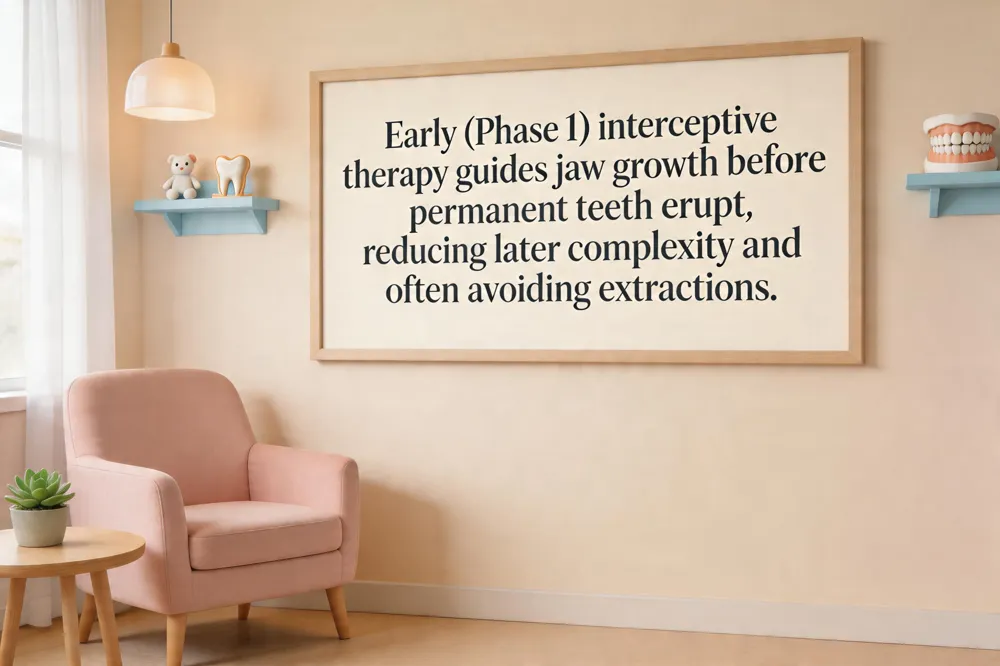 Early (Phase 1) orthodontic treatment, also called interceptive therapy, addresses developing bite problems while the jawbones are still soft and the baby teeth are present. By guiding growth, creating space, and correcting crossbites, underbites, crowding, or excessive spacing, the complexity and duration of later comprehensive orthodontics are often reduced, and extractions can sometimes be avoided. The American Association of Orthodontists’ Rule of 7 advises that every child receive a first orthodontic evaluation by age 7, when the first permanent molars have erupted and the orthodontist can clearly see emerging issues. Early detection allows simple, less invasive interventions that improve long‑term oral health. Trielle Orthodontics offers compassionate pediatric orthodontics, beginning with this age‑7 screening and using 3‑D imaging, palatal expanders, and lightweight fixed devices tailored to each child’s anatomy. Pre‑brace treatments guide the jaws into a favorable position, often shortening overall treatment time, lowering costs, and providing a smoother experience for families in Union, NJ.
Pros, Cons, and Real‑World Use of Braces for Kids
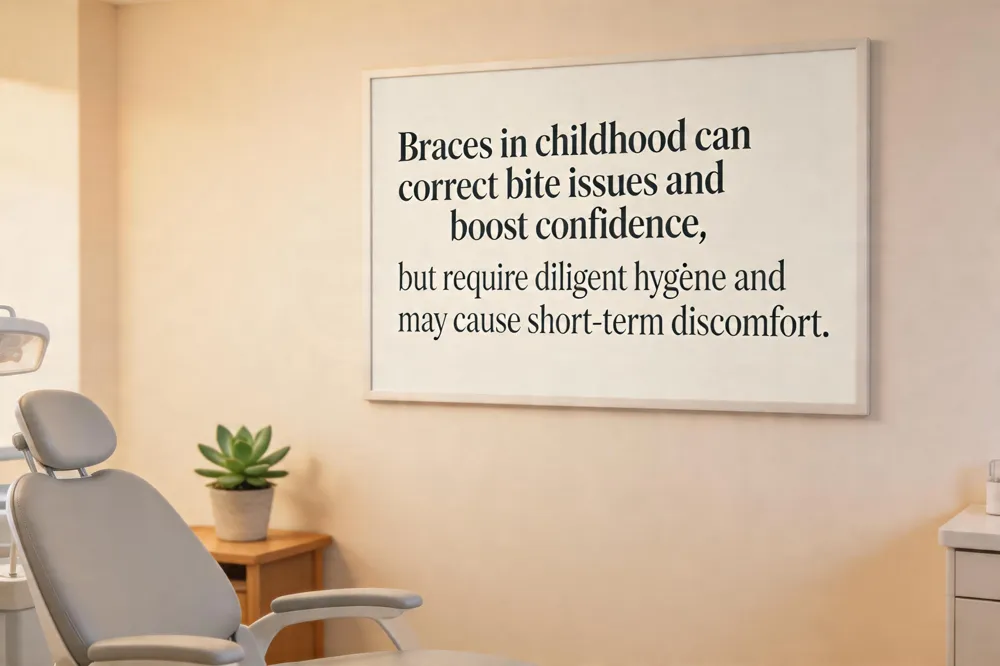 Benefits of braces for children – Braces guide jaw growth while the bones are still malleable, aligning upper and lower jaws and preventing serious misalignments later. They create space for emerging permanent teeth, reducing crowding, impaction, and oral‑hygiene problems that can cause cavities and gum disease. Early treatment also corrects habits such as thumb‑sucking or mouth‑breathing, supporting facial development, speech, and self‑confidence. Trielle Orthodontics customizes each child’s plan with comfortable, modern appliances and flexible payment options.
Pros and cons of pediatric braces – Early braces can correct bite issues, improve oral health, and boost self‑esteem before teeth become permanent. Softer jawbones make space creation easier, often less need need extractions. Drawbacks include diligent daily oral hygiene, occasional post‑adjustment discomfort, and a 1‑2 year treatment timeline with regular visits. Trielle mitigates these with low‑profile brackets, clear‑aligner choices, and personalized care plans that keep routines manageable.
Limited use of braces on baby teeth – Full‑arch braces are rarely placed on primary teeth. In Phase 1 interceptive treatment a few brackets may be attached to select baby teeth to address severe crossbites or open bites, but most early work uses expanders, palate‑widening devices, or habit‑control appliances. The goal is to preserve natural space‑maintaining function while shaping the developing bite. Parents should consult an orthodontist to determine if limited‑brace therapy is warranted.
Phase 1: Early Intervention Details
 Phase 1 braces before and after: In early‑phase treatment at Trielle Orthodontics (typically ages 6‑9) a palate expander or removable appliance is placed. Before treatment the bite may show crowding, a cross‑bite, or a narrow upper arch. After 6‑12 months of wear the expander widens the palate, creates space, and aligns the arches, resulting in a broader, more functional smile that reduces the need for extractions or surgery later.
Phase 1 braces expander: The expander gently widens the upper palate, correcting cross‑bites and crowding. Using digital scans, Trielle fabricates a custom‑fit, comfortable device worn for about 6‑12 months. Regular check‑ins ensure proper expansion and a smooth transition to Phase 2.
Kids retainer before braces: After Phase 1, a clear removable retainer holds the newly created space while permanent teeth erupt. Wearing it full‑time initially, then at night, prevents relapse and stabilizes bone and ligaments, acting as an “insurance policy” until comprehensive braces are placed.
Phase 1 vs Phase 2 orthodontics cost: Phase 1 typically costs $1,500‑$3,500, while Phase 2 ranges $3,000‑$7,000. Although two‑phase treatment may be ~25 % more overall, early intervention can shorten Phase 2 and reduce later complexity, often offsetting added expense. Insurance may cover preventive Phase 1 services.
Phase 2: Comprehensive Alignment Explained
 Phase 2 braces typically need 12‑24 months, but after early interceptive work many children finish in 6‑12 months; complex cases may extend to 2‑3 years. At Trielle Orthodontics the cost of Phase 2 ranges from $3,500‑$7,500, reflecting appliance type, case complexity and any adjunctive devices, and adds roughly 25 % to the overall expense when combined with Phase 1. While a single set of braces can treat many issues, a two‑set strategy is recommended for severe overbites, underbites, crossbites, jaw‑growth discrepancies or early loss of baby teeth, because early guidance reduces later treatment difficulty and duration. Phase 1 appliances are cheaper—about $1,500‑$3,500—since they address only specific problems, whereas Phase 2 comprehensive braces treat the full permanent dentition. Consequently, the total cost of two phases is usually higher than a single‑phase plan, but early intervention can prevent more invasive, costly procedures later.
Making the Decision: Cost, Comfort, and Care
 When families weigh two‑phase orthodontics, the first question is overall cost. Phase 1 (early interceptive) usually runs $1,500‑$3,500, covering expanders, space maintainers or limited braces and a 9‑12‑month active period. Phase 2 (comprehensive braces or clear aligners after permanent teeth erupt) is $3,000‑$7,000 for a full arch of brackets or a complete aligner series. Because Phase 1 is shorter and treats only part of the dentition, its price is lower, but the combined expense of two phases can be roughly 25 % higher than a single‑phase plan. Many insurers treat Phase 1 as preventive care, so coverage varies; flexible payment plans, bundled pricing, and HSAs/FSAs often help balance the out‑of‑pocket amount. Personalized treatment planning—using digital scans, 3‑D imaging, and growth monitoring—ensures each child receives the most efficient sequence, potentially shortening Phase 2 and offsetting extra cost. When families understand the financial options and see a clear, customized roadmap, confidence grows and the next step—scheduling a comprehensive evaluation—becomes an informed, comfortable decision.
Your Child’s Smile Journey Starts Today
Two‑phase orthodontic care gives children a strong foundation for a healthy, balanced smile. Early intervention (Phase 1) guides jaw growth, creates space, and reduces trauma risk, while the later Phase 2 fine‑tunes tooth position and bite, often shortening overall treatment time and avoiding extractions or surgery. Because the American Association of Orthodontists recommends a first evaluation by age 7, catching problems early lets the orthodontist plan the optimal timing for each phase. At Trielle Orthodontics in Union, NJ, we combine modern digital imaging, personalized treatment plans, and flexible payment options to ensure every child receives compassionate, effective care from the very first visit.