Understanding the Intersection of Orthodontics and Jaw Surgery
Orthodontic treatment alone can align teeth, but when the underlying skeletal framework is mis‑positioned, braces cannot achieve a stable, functional bite. Combining pre‑surgical orthodontics (typically 12‑18 months of braces or clear aligners) with orthognathic surgery allows the teeth to be placed in their correct relationship before the jaws are repositioned, and then fine‑tuned after healing. A multidisciplinary team—orthodontist, oral and maxillofacial surgeon, and often a prosthodontist or speech therapist—collaborates from diagnosis through virtual 3‑D planning, intra‑operative execution, and post‑operative orthodontic refinement. This coordinated approach ensures that each professional addresses their specialty while keeping the overall treatment goal in focus. Patients seek both functional improvements—easier chewing, clearer speech, relief of TMJ pain, better airway—and facial harmony, such as balanced facial proportions, a straight profile, and increased self‑confidence.
When Orthognathic Surgery Becomes Part of Orthodontic Care
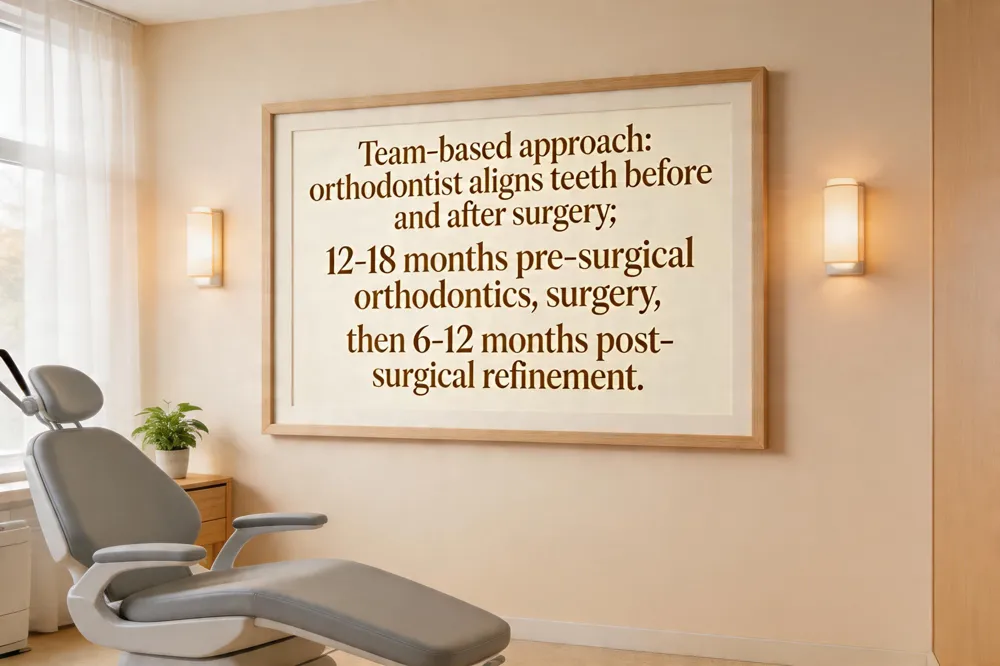 Orthognathic surgery is a surgical solution for skeletal bite problems that cannot be resolved with braces alone. The orthodontist’s role is to determine whether the malocclusion is purely dental or requires skeletal correction, to align the teeth with braces or clear aligners before surgery, and to fine‑tune the bite afterward. Adults of any age— including those in their thirties—are eligible as long as facial growth is complete and overall health is good; age 30 is certainly not too late. The orthodontist does not perform the bone‑cutting; that is done by an oral‑and‑maxillofacial surgeon, who works closely with the orthodontist to plan the movements using 3‑D imaging and virtual surgical guides. Pre‑surgical orthodontics typically lasts 12–18 months, surgery is performed under general anesthesia, and post‑surgical orthodontic refinement continues for another 6–12 months. This collaborative, team‑based approach ensures that both the teeth and the underlying jaw bones achieve optimal function and facial harmony.
Adult Orthodontic Options and What Feels Most Uncomfortable
 Trielle Orthodontics offers a full spectrum of adult orthodontic appliances to match any lifestyle and aesthetic preference. Classic stainless‑steel braces provide reliable, efficient correction, while low‑visibility ceramic brackets blend with natural tooth color for a more discreet look. For patients seeking the utmost privacy, the practice supplies custom‑made clear aligners such as Invisalign and lingual braces that sit behind the teeth and are completely hidden. All of these options are enhanced by SureSmile digital‑imaging and robotic archwire technology, which creates a precisely tailored treatment plan and often shortens overall treatment time by a few months.
The most painful orthodontic procedure is usually the initial placement of braces, especially when the archwire is first activated. During this appointment the brackets are bonded and the wire is tightened, producing a strong, immediate pressure that forces the teeth to move. Patients typically feel a dull, achy soreness lasting three to seven days, sometimes accompanied by cheek or lip irritation from the new hardware. Subsequent adjustments are generally milder, whereas switching clear aligners causes only brief, mild soreness that fades within a day or two.
Post‑Surgical Recovery and Long‑Term Effects
 Recovery after orthognathic surgery proceeds in stages. In the first 24–48 hours patients experience swelling, mild bleeding and discomfort that can be controlled with pain medication, ice packs and head elevation. Swelling peaks around day 2–3 and then subsides over the next 2–4 weeks while a liquid or soft‑food diet is maintained. Light activities resume quickly, and most people feel comfortable returning to work or school by 6–8 weeks; the bone continues remodeling and reaches full strength around 3–6 months. Nutrition should be high‑protein and high‑calorie, with soft foods such as smoothies, soups, yogurt, and mashed vegetables; hard or crunchy items are avoided for at least 4–6 weeks to protect the healing osteotomies. Long‑term side effects may include persistent numbness in the lower lip or chin from nerve irritation, temporary or rarely permanent, and occasional TMJ discomfort or clicking if joint mechanics change. Failure to follow post‑surgical retention protocols can lead to bite relapse, returning the original misalignment. In rare cases additional procedures are needed to address joint pain, bite problems, or unexpected bone changes. Diligent follow‑up care and proper oral hygiene help preserve the functional and aesthetic benefits of surgery.
Financial Planning for Orthodontic and Surgical Care
 When budgeting for comprehensive orthodontic and orthognathic treatment, start by estimating the cost of the braces or aligners. At Trielle Orthodontics adult orthodontic care typically falls between $3,000 and $8,000, while a full treatment—including retainers and follow‑ups—ranges from $4,000 to $9,000. A $6,000 price tag is well within the national average, so it is not excessive. Most dental insurance plans cover a portion of these fees, and Trielle offers flexible in‑office financing, 0 % interest plans, and CareCredit to spread payments over time.
Jaw surgery is a larger investment, usually between $20,000 and $40,000, covering the surgeon’s fee, hospital stay, anesthesia, imaging, and the orthodontic work before and after the operation. Insurance often covers the surgical portion if deemed medically necessary, but patients usually bear out‑of‑pocket costs for orthodontic appliances and ancillary services. To manage the overall expense, create a detailed budget that includes pre‑surgical orthodontics (12‑18 months), the surgical procedure, and post‑surgical orthodontic refinement (6‑12 months). Use financing options, insurance benefits, and payment plans to keep monthly outlays manageable while achieving the desired functional and aesthetic outcomes.
Outcomes and Success Rates of Orthognathic Surgery
 Jaw surgery, also known as orthognathic surgery, typically achieves a very high success rate, with studies reporting that 85 %–95 % of patients attain the intended functional and aesthetic results. The Cleveland Clinic cites a success rate of nearly 94 % when the procedure is performed by an experienced surgical‑orthodontic team using modern techniques. Success is measured by proper jaw alignment, stable bite function, and minimal complications during the recovery period.
Factors that influence these results include thorough pre‑surgical planning—often using 3‑D imaging, virtual surgical simulation, and computer‑guided cutting guides—patient selection (completion of facial growth and realistic expectations), and coordinated orthodontic treatment before and after surgery to fine‑tune the bite. Age, overall health, and adherence to post‑operative instructions (soft‑food diet, oral hygiene, and follow‑up appointments) also play a role.
Patient satisfaction is generally high; most individuals report improved chewing, speech, breathing, and facial aesthetics, leading to increased confidence and quality of life. Surveys indicate that over 90 % of patients experience a noticeable enhancement in daily activities and self‑esteem after successful orthognathic treatment.
Making an Informed Decision
When deciding on orthognathic surgery, patients must balance functional and aesthetic outcomes. Functional goals—improved chewing, speech, airway clearance, TMJ relief, and sleep‑apnea reduction—often drive the medical necessity, while aesthetic goals focus on facial symmetry, chin projection, and overall confidence. Modern planning tools (3‑D CT, virtual surgical simulation) let patients visualize both functional restoration and facial changes, helping them weigh which outcomes matter most. Successful results rely on a tightly coordinated team: an oral and maxillofacial surgeon, an orthodontist, and sometimes a sleep‑medicine or TMJ specialist. The surgeon performs the skeletal repositioning, the orthodontist aligns the teeth pre‑ and post‑surgery, and together they use digital imaging to create custom splints, plates, and wires. For prospective patients, the next steps are a comprehensive evaluation (clinical exam, X‑rays, 3‑D scans), discussion of treatment goals, and a detailed treatment timeline that includes 12‑18 months of pre‑surgical orthodontics, the surgical episode, and 6‑12 months of post‑surgical orthodontic refinement. This collaborative, goal‑focused approach maximizes both functional health and facial harmony.