Welcome to Your Orthodontic Journey
Understanding how teeth move is the foundation of every successful orthodontic case. Bone remodeling—osteoclast‑driven resorption on the pressure side and osteoblast‑driven formation on the tension side—allows braces or clear aligners to guide teeth into their ideal positions while preserving periodontal health. When patients grasp this biology, they recognize why gentle, continuous forces are preferred, why treatment timelines vary, and how compliance directly influences outcomes. Patient education therefore becomes a critical component of care: it reduces anxiety, promotes proper oral‑hygiene habits, and ensures wear of aligners or elastics as prescribed. This article will explain the basic science of tooth movement, highlight the importance of informed patient participation, and outline what you can expect throughout the orthodontic process—from initial digital imaging and customized force vectors to the final retention phase that secures lasting results.
The Biological Foundations of Tooth Movement
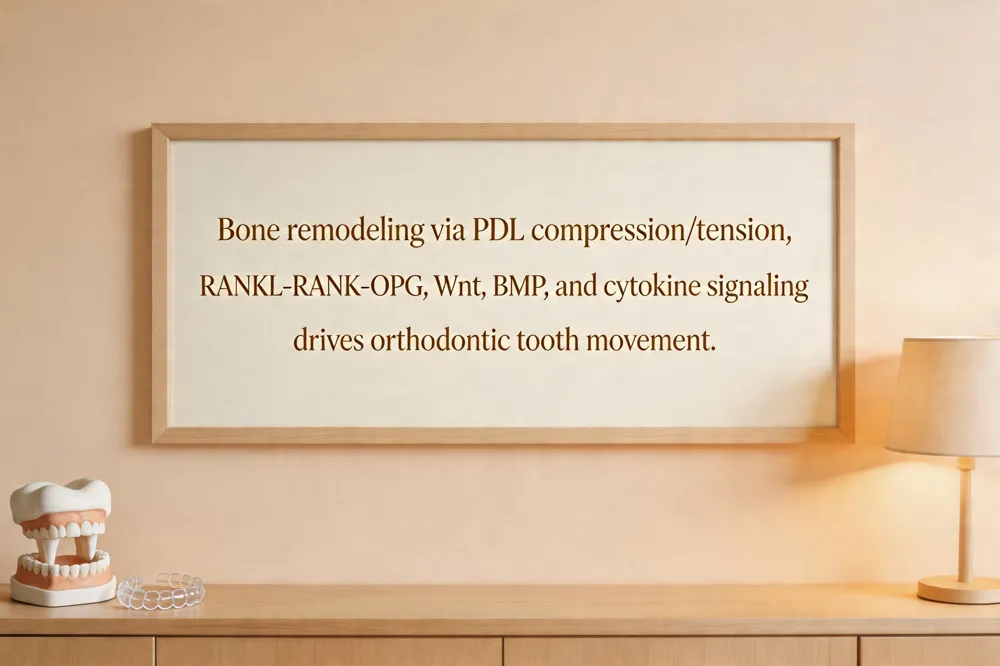 Orthodontic tooth movement is fundamentally a process of bone remodeling driven by the periodontal ligament (PDL). When a brace or clear aligner applies a controlled, gentle force, the PDL on the pressure side is compressed while the opposite side is placed. This mechanical stimulus triggers an inflammatory cascade that recruits osteoclasts to resorb alveolar bone on the pressure side and stimulates osteoblasts to lay down new bone on the tension side, allowing the tooth to drift into a new position.
Key molecular pathways orchestrate this remodeling. The RANKL‑RANK‑OPG system regulates osteoclast differentiation: pressure‑induced fibroblasts up‑regulate RANKL, which binds RANK on osteoclast precursors, while OPG acts as a decoy inhibitor. Wnt signaling and BMPs promote osteoblast activity on the tension side, enhancing bone formation. Cytokines such as IL‑1β, TNF‑α, and prostaglandin E2 amplify the response, ensuring a balanced turnover of bone tissue.
How do teeth move in orthodontics?
When an orthodontic appliance applies a controlled force, the PDL’s compression side initiates osteoclast‑mediated bone resorption, and the tension side stimulates osteoblast‑mediated bone deposition via RANKL‑RANK‑OPG, Wnt, and BMP pathways. This coordinated remodeling shifts the tooth gradually while preserving periodontal health.
What is the biological basis of orthodontic tooth movement?
The basis lies in pressure‑tension zones within the PDL that trigger inflammatory signaling and molecular cascades (RANKL‑RANK‑OPG, Wnt, BMP) to remodel bone. By modulating force magnitude, direction, and duration, orthodontists harness these pathways to achieve precise, individualized tooth positioning.
The Three M’s: Muscles, Malformation, and Malocclusion
 Orthodontic treatment begins with a thorough assessment of the three M’s—Muscles, Malformation, and Malocclusion. Muscles generate functional forces; the tongue, lips, and facial muscles constantly push and pull on teeth, influencing their position and the direction of jaw growth. When these forces are unbalanced, they can exacerbate dental problems. Malformation refers to skeletal and dental anomalies such as a narrow maxillary arch, an over‑grown mandible, or tooth size discrepancies; these structural issues create the substrate that the orthodontic appliances must remodel. Malocclusion is the clinical outcome—the misalignment of the arches and an improper bite relationship, which can manifest as crowding, spacing, overbite, underbite, or crossbite. By evaluating each of these factors, orthodontists design individualized treatment plans that may combine clear aligners, traditional braces, or auxiliary devices to apply light, continuous forces that remodel the periodontal ligament and alveolar bone while preserving periodontal health. This comprehensive approach ensures efficient tooth movement, minimizes risk of root resorption, and leads to stable, functional results.
Force Vectors, Centers of Resistance, and Tooth Translation
 Orthodontic tooth movement is governed by the interplay of forces and moments applied to the tooth and its periodontal ligament. The point where a net force must without creating rotation is the center of resistance (CRes), typically located one‑third to one‑half of the root length apical to the alveolar crest. When the line of action of a force does not pass through the CRes, a moment is generated, producing a center of rotation (CR) whose location depends on the force‑to‑moment (M/F) ratio.
- Low M/F ratio (≈ 0‑7 : 1) yields uncontrolled tipping: the crown moves in the force direction while the root moves oppositely, with the CR near the CRes.
- Controlled tipping (M/F ≈ 8‑10 : 1) positions the CR at the root apex, allowing the crown to tip while the root remains relatively stable.
- Translation (bodily movement) occurs when the M/F ratio equals the distance from the bracket to the CRes (≈ 10 mm for a single‑rooted tooth). The force line passes through the CRes, producing no rotation and moving the entire tooth parallel to the force vector.
- Torque (root‑controlled movement) requires a high M/F ratio that exceeds the CRes distance, creating a couple that rotates the root while the crown stays nearly stationary.
These mechanics are the same for braces and clear aligners, though modern digital planning (iTero®, CBCT, AI‑driven software) allows clinicians to calculate precise force vectors and predict the resulting tooth movement. Understanding the M/F ratio and the distinction between CRes and CR helps orthodontists design treatment plans that achieve desired movements—tipping, controlled tipping, translation, or torque—while minimizing unwanted side effects such as root resorption.
What to Expect During Braces Treatment
 After each adjustment you will usually notice a mild, temporary looseness or “wiggle” in the teeth. This sensation is a normal sign that the periodontal ligament is transmitting the gentle, continuous force from the brackets and archwire to the surrounding bone, initiating the bone‑remodeling cycle of osteoclast‑driven resorption on the pressure side and osteoblast‑driven formation on the tension side.
Typical movement per adjustment period is modest—most patients experience only a few millimeters of shift over the 4‑ to 6‑week interval between visits, roughly 1 mm per month under optimal light forces. The mobility usually lasts a few days to a couple of weeks, after which the bone re‑hardens and the teeth feel firm again.
Warning signs of abnormal movement include sudden, excessive looseness, sharp or persistent pain, a tooth that feels wildly unstable, or any noticeable swelling or discoloration of the gums. These symptoms may indicate excessive force or an underlying issue such as root resorption and should be promptly evaluated by your orthodontist.
Answer to the question: How much tooth movement is normal with braces? During treatment you can expect a mild, temporary looseness or “wiggle” as the teeth shift, usually noticeable after adjustments. This sensation is a sign that bone remodeling is occurring and typically involves only a few millimeters of movement per adjustment period. Most patients feel this subtle mobility for the first few days to a couple of weeks, after which the teeth feel firm again as the bone re‑hardens. Excessive or sudden looseness, sharp pain, or a tooth that feels wildly unstable is not normal and should be evaluated by your orthodontist. At Trielle Orthodontics we monitor each tooth’s progress to ensure movement stays within safe, controlled limits.
Patient Education, Orthodontist Training, and Modern Technology
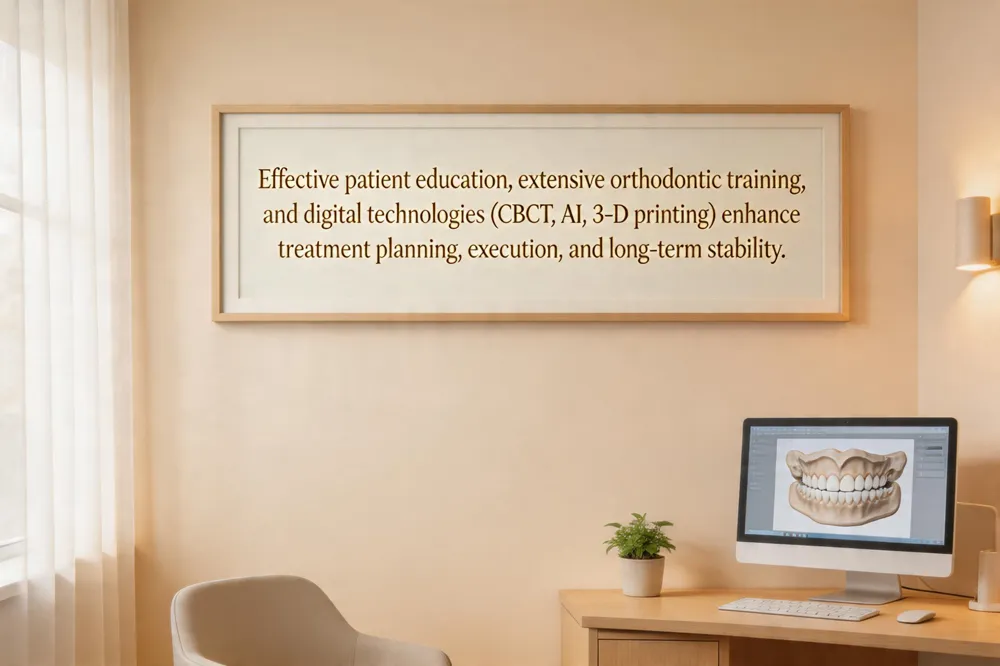 Patient education in dentistry is the process of delivering clear, understandable information so patients and their caregivers can make informed decisions about oral health. It goes beyond handing out brochures; clinicians explain procedures, demonstrate proper brushing and flossing, and use intra‑oral cameras to show what is happening inside the mouth. By teaching the “why” behind treatment plans and daily care habits, education empowers patients to follow recommendations, reduce anxiety, and detect problems early, leading to better overall outcomes.
Orthodontist training is extensive. After a four‑year bachelor’s degree, a prospective orthodontist completes a four‑year dental program (DDS or DMD) to become a licensed dentist. This is followed by a two‑ to three‑year orthodontic residency, during which the clinician earns a master’s or certificate in orthodontics and gains hands‑on experience with braces, clear aligners, and retention appliances. Many pursue board certification through the American Board of Orthodontics, which requires written and clinical examinations. The total pathway totals roughly ten to eleven years of post‑secondary education, with continuous education required to stay current.
Modern technology—digital imaging, 3‑D CBCT scans, computer‑aided design, and custom‑fabricated retainers—has transformed planning and execution. Precise force vectors are calculated from 3‑D models, allowing individualized, comfortable treatment plans that predict tooth movement accurately and reduce treatment time. Retainers, often designed with the same digital workflow, provide a stable post‑treatment environment, preventing relapse and ensuring lasting results.
Putting It All Together for a Successful Smile
Orthodontic tooth movement relies on a well‑orchestrated blend of biomechanics and biology: light, continuous forces transmitted by the periodontal ligament trigger osteoclast‑mediated bone resorption on the pressure side and osteoblast‑mediated bone formation on the tension side, allowing teeth to translate, tip, or torque into their new positions. Understanding this process empowers patients to stay informed and compliant—wearing aligners the prescribed 20‑22 hours daily, maintaining meticulous oral hygiene, and attending regular adjustments reduce the risk of root resorption, decalcification, and treatment delays. Trielle Orthodontics in Union, NJ maximizes these principles with state‑of‑the‑art digital imaging, 3‑D treatment planning, and custom force‑vector calculations, while delivering individualized care plans that prioritize comfort, flexible payment options, and ongoing patient education. By combining scientific insight with cutting‑edge technology, Trielle ensures each smile is achieved safely, efficiently, and sustainably.