Why a Structured Smile Assessment Matters
A structured smile assessment is the first step toward effective orthodontic care because it catches problems before they become severe. Early detection—often by age seven—allows clinicians to guide jaw growth, prevent crowding, and reduce the need for extensive future work. Modern technology such as 3‑D imaging, digital scans, and AI‑driven treatment simulations transforms diagnosis from a visual guess into a precise, data‑rich analysis, revealing hidden bite issues, subtle crowding, and airway constraints that a plain exam might miss. Armed with this information, orthodontists can craft personalized treatment plans that match each patient’s anatomy, lifestyle, and aesthetic goals, whether the choice is clear aligners, ceramic braces, or lingual appliances. Trielle Orthodontics in Union, NJ, embraces this patient‑centered approach: they combine comprehensive smile‑assessment questionnaires, state‑of‑the‑art imaging, and collaborative goal‑setting to ensure every individual receives a tailored, comfortable, and effective orthodontic solution.
Identifying the Signs: When Braces May Be Needed
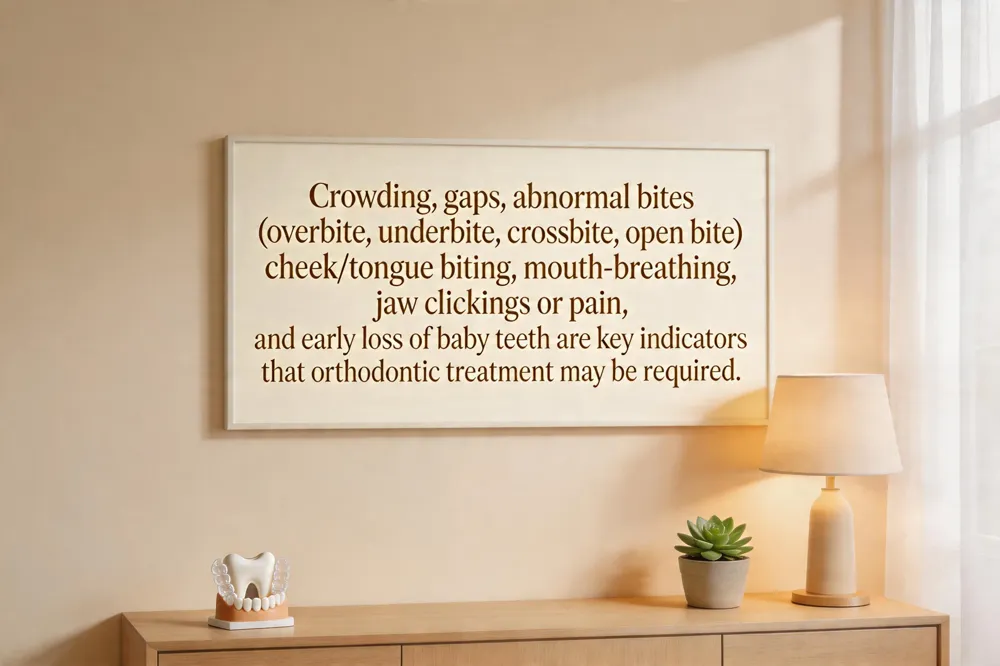 Crowding or overlapping teeth create hard‑to‑clean spaces that invite plaque, decay, and gum disease. Excessive gaps and spacing issues trap food, shift neighboring teeth, and can affect bite stability. overbite, underbite, crossbite, or open bite alters how the upper and lower jaws meet, leading to uneven tooth wear, jaw pain, and facial‑aesthetic concerns. Speech, chewing, and facial appearance are often compromised—lisps, difficulty pronouncing certain sounds, and a strained jawline are common clues. A simple questionnaire—like the Smile Assessment Form used by Union, NJ practices—asks patients to answer yes/no to eight statements covering appearance, spacing, crowding, and functional discomfort, revealing hidden orthodontic problems before they worsen.
What are signs of needing braces? Visibly crooked or overlapping teeth, noticeable gaps, abnormal bite (overbite, underbite, crossbite, open bite), persistent cheek or tongue biting, mouth‑breathing, jaw clicking or pain, and early loss of baby teeth are key indicators.
How do I know if I need orthodontics? If you experience difficulty chewing, speaking, frequent cheek‑biting, or any of the above signs, schedule a professional evaluation.
Do I need braces if I have an overbite? Moderate to severe overbites usually require treatment—braces or clear aligners—to prevent wear, pain, and speech issues, while mild cases may be monitored.
Functional Concerns: Jaw Pain, TMJ, and Oral Comfort
 Temporomandibular joint (TMJ) symptoms—such as chronic jaw pain, clicking, popping, and headaches—are often rooted in bite misalignment. An improper bite (overbite, underbite, crossbite, or open bite) forces the joint and surrounding muscles to work harder, leading to strain and discomfort. When the occlusion is corrected with braces, clear aligners, or other orthodontic appliances, the jaw can close more evenly, reducing TMJ stress and alleviating pain. Orthodontists routinely evaluate TMJ‑related complaints and, when the issue stems from dental malocclusion, they can provide effective treatment. For more severe joint pathology, a referral to a TMJ specialist may be needed.
The “three M’s” guide this evaluation: muscles (the functional forces of facial and masticatory muscles), malformation (skeletal or dental structural abnormalities), and malocclusion (the resulting misalignment). By analyzing all three, orthodontists create balanced, personalized plans that improve both oral function and overall comfort.
Do orthodontists treat TMJ disorders? Yes—when TMJ symptoms are linked to bite problems, orthodontic correction can relieve strain, pain, and clicking.
What are the 3 M's in orthodontics? Muscles, malformation, and malocclusion—the three pillars that shape a comprehensive treatment strategy.
Age, Cost, and Treatment Duration
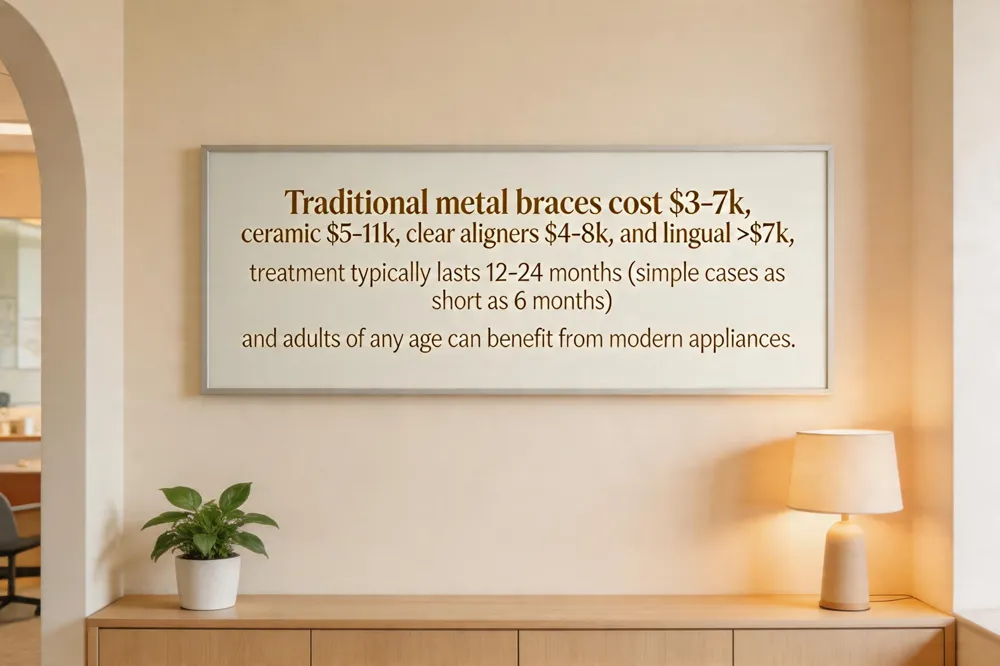 When you walk into Trielle Orthodontics in Union, NJ, the first thing we discuss is how the treatment fits your budget and life stage. Traditional metal braces typically run $3,000‑$7,000, ceramic braces average about $5,834 (range $4,480‑$11,312), clear‑aligner systems such as Invisalign cost $4,000‑$8,000, and lingual braces can exceed $7,000 and a the up to $17,411. We provide a personalized estimate that includes retainers and follow‑up visits, and we work with most dental insurance carriers while offer CareCredit and flexible financing plans to keep out‑of‑pocket costs manageable.
Age is no barrier—being 20 is certainly not too old for braces. Adults now make up roughly one‑third of all orthodontic patients, and modern appliances (clear aligners, ceramic braces, self‑ligating systems) move teeth efficiently even in mature bone.
Typical treatment spans 12‑24 months, though simple crowding may finish in six months while complex bite corrections can require up to two years. Our use of 3‑D imaging, AI‑driven treatment planning often shortens those timelines. After the active phase, retainers preserve the results.
How much do braces cost? See the ranges above; Trielle tailors a quote to your case and insurance.
Is 20 too old for braces? No—adults of any age achieve excellent outcomes with today’s technology.
How long do you have to wear braces? Generally 12‑24 months, depending on complexity and appliance type.
Smile Aesthetics: The 8 Components and Assessment Checklist
 A balanced smile is built on eight key components: the lip line, smile arc, upper‑lip curvature, lateral negative space, smile symmetry, the frontal occlusal plane, dental elements (shape, size, colour) and gingival elements (gum line and health). A smile‑assessment form captures patient concerns about each of these areas—asking, the appearance of the teeth and smile, colour, shape, spacing, and any embarrassment in social settings. By reviewing the checklist, clinicians can pinpoint which aesthetic components need correction and also see how they relate to functional health, such as plaque retention in crowded areas or TMJ strain from misaligned bites. Trielle Orthodontics uses this personalized evaluation to design treatment plans that address both the visual and functional aspects of each patient’s smile, ensuring that aesthetic improvements also support better oral hygiene and jaw comfort.
Your Personalized Orthodontic Journey at Trielle
 At Trielle Orthodontics in Union, NJ we start every case with a free smile assessment that asks you about appearance, comfort and functional concerns. Using a digital intra‑oral scanner, we capture a precise 3‑D model of your teeth, which eliminates messy impressions and speeds diagnosis. Modern imaging—3D cone‑beam CT and AI‑driven software—feeds the lab to fabricate clear aligners or custom brackets that fit perfectly, reducing chair time and improving outcomes. After the scan, our team outlines a step‑by‑step plan: from the initial assessment, through appliance placement, periodic adjustments, to the final delivery of retainers that preserve your new smile. We also provide patient‑education resources and flexible payment options, working with insurance to maximize coverage.
Do I need a digital scanner for braces? No. You don’t bring a scanner; we use one to create a digital model that enhances accuracy and efficiency. Braces can still be placed with traditional impressions, but the scanner makes the process faster and more comfortable.
Take the First Step Toward a Healthier, More Confident Smile
Recognizing the five warning signs—crowded or overlapping teeth, excessive gaps, difficulty chewing or biting, persistent jaw pain or clicking, and changes in facial appearance—helps you understand when orthodontic care is needed. A professional smile assessment, like the one offered at Trielle Orthodontics in Union, NJ, uses a structured questionnaire and digital imaging to pinpoint both aesthetic and functional concerns. Our practice combines 3‑D scanning, AI‑driven treatment planning, and personalized consultations to create a plan that fits your lifestyle and goals. Whether you prefer clear aligners or traditional braces, we tailor each option for optimal comfort and results. You’ll also reduce the risk of cavities, gum disease, and TMJ discomfort while improving speech and overall facial harmony. Contact us now to start your journey.