Welcome to Trielle Orthodontics’ Two‑Phase Treatment Guide
Two‑phase orthodontics is a strategic approach that begins with early, interceptive treatment (Phase 1) while the child still has a mix of baby and permanent teeth, then moves to a comprehensive refinement phase (Phase 2) after most permanent teeth have erupted. The early evaluation, recommended by the American Association of Orthodontists at age 7, lets the orthodontist assess jaw growth, bite problems and space needs before growth slows. At Trielle Orthodontics we use this timing to create a personalized plan: Phase 1 may involve palate expanders, limited braces or habit‑breaking appliances to guide jaw development and create room for erupting teeth; after a monitored resting period, Phase 2 employs full braces or clear aligners to fine‑tune alignment and achieve a stable, functional bite. Our care combines digital 3‑D imaging, flexible financing and ongoing education so families understand each step and see the long‑term benefits of early intervention.
Phase 1 – Early Interceptive Orthodontics
 Early orthodontic treatment article
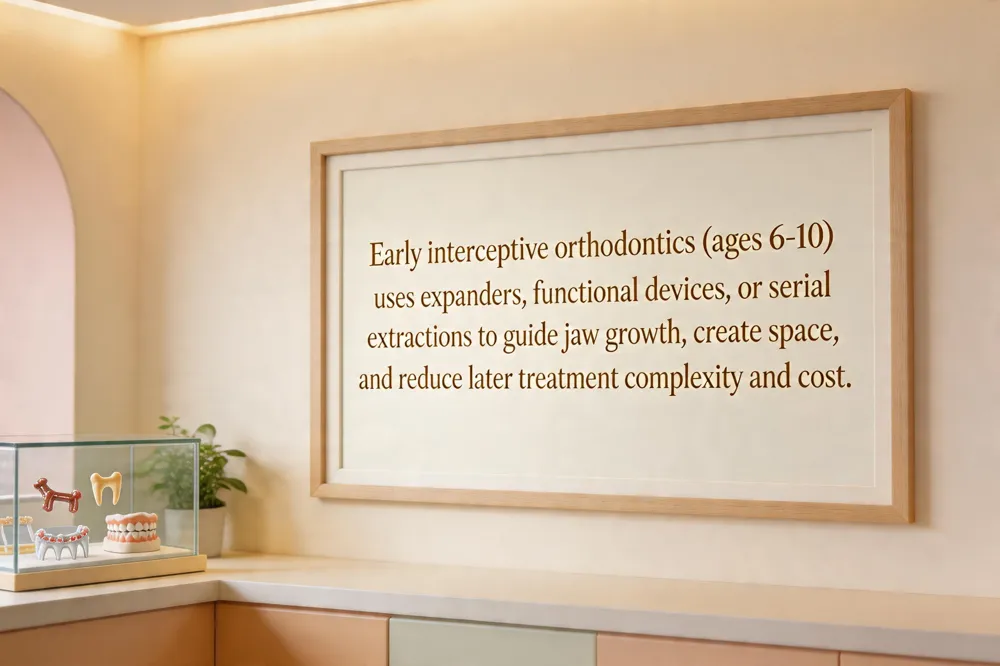
Early orthodontic treatment—also called interceptive orthodontics—targets developing malocclusions during the deciduous or early mixed‑dentition phase, typically between ages 6 and 10. By using simple appliances such as expanders, functional devices, or serial extractions, the complexity, duration and cost of later comprehensive treatment can be reduced. Trielle Orthodontics in Union, NJ combines digital imaging with individualized plans to guide jaw growth, improve facial aesthetics and boost a child’s confidence.
Early orthodontic treatment article
Early orthodontic treatment—also called interceptive orthodontics—targets developing malocclusions during the deciduous or early mixed‑dentition phase, typically between ages 6 and 10. By using simple appliances such as expanders, functional devices, or serial extractions, the complexity, duration and cost of later comprehensive treatment can be reduced. Trielle Orthodontics in Union, NJ combines digital imaging with individualized plans to guide jaw growth, improve facial aesthetics and boost a child’s confidence.
Which dentition can be involved in an interceptive orthodontic treatment? Interceptive treatment may begin while a child still has primary (deciduous) teeth or during the mixed dentition stage when permanent incisors and first molars have erupted. This timing allows the orthodontist to guide jaw growth, create space for erupting permanent teeth and correct bite problems before they become severe.
Phase 1 braces Phase 1 braces are limited, early‑phase appliances used while a mix of baby and permanent teeth is present (ages 6‑10). They address severe crowding, crossbites, overbites or jaw discrepancies, usually for 6‑12 months, and often reduce the need for extensive later treatment.
Early orthodontic treatment pros and cons Benefits include guided jaw development, space creation, reduced need for extractions or surgery and improved long‑term stability. Drawbacks are the need for strict compliance, regular visits and diligent oral‑hygiene supervision, which can be challenging for younger patients.
What age is early treatment for orthodontists? The AAO recommends a first orthodontic screening by age 7. Phase 1 typically begins around 8‑9 years old, after the first permanent molars have erupted, to intervene while growth potential remains.
Phase 1 vs Phase 2 orthodontic treatment Phase 1 (early) focuses on growth guidance, space creation and bite correction during mixed dentition (ages 6‑10). Phase 2 starts after most permanent teeth have erupted (ages 11‑14) and fine‑tunes final alignment with full braces or clear aligners. Phase 1 is shorter and often less costly, while Phase 2 provides the definitive aesthetic and functional result.
Phase 2 – Comprehensive Alignment and Its Necessity
 Phase 2 begins after the permanent teeth have erupted and the early, growth‑guiding Phase 1 is complete ( AAO advice is to start this comprehensive phase around ages 11‑14. It is required when Phase 1 has created space or guided jaw growth but the bite, crowding, or jaw relationship is still significant. Severe overbites, underbites, crossbites, or notable spacing typically call for Phase 2, while milder cases may be resolved with a single‑phase approach.
Typical appliances in Phase 2 are full‑arch braces (metal, ceramic, or lingual) or clear aligner systems such as Invisalign. The period usually lasts 12‑24 months, followed by retainers to preserve the result.
Cost considerations: Phase 1 generally ranges from $1,500‑$3,500; Phase 2 comprehensive orthodontics costs $3,000‑$7,000, making two‑phase treatment about 25 % more expensive than a single‑phase plan. Expenses include the appliance, periodic x‑rays, adjustments, and retainers. Most offices, including Trielle Orthodontics in Union, NJ, offer flexible financing and work with insurance to offset costs.
Comprehensive orthodontics addresses both tooth alignment and bite relationship, often coordinated with other specialists for long‑term stability. Modern digital scanning and personalized treatment plans ensure optimal function, aesthetics, and patient comfort.
The Refinement Stage: Finishing the Smile
 The refinement stage—also called the finishing or detailing stage—is the final phase of orthodontic treatment when the majority of tooth movement has already been achieved. During this period the orthodontist fine‑tunes each tooth’s position using precise adjustments such as elastics, wire bends, or additional clear‑aligner trays to obtain the optimal bite and smile aesthetics. Modern digital imaging and 3‑D treatment planning allow the clinician to identify any minor discrepancies and create custom refinements that give those “little nudges” needed for perfect alignment.
[Invisalign refinements](https://www.lascrucessmiles.com/invisalign-refinements-explained/) are extra sets of clear aligners used after the main series to correct small gaps, rotations, or bite issues that remain. They are a normal part of treatment and do not indicate failure. To keep refinements to a minimum, wear aligners at least 22 hours a day, change trays on schedule (typically every 1–2 weeks), protect them in their case, attend every appointment, and follow any attachment or interproximal reduction instructions.
The cost of refinements at [Trielle Orthodontics](https://m.yelp.com/biz/trielle-orthodontics-union) ranges from $200 to $500 per set, depending on complexity. Many plans include a limited number of refinements; additional rounds are billed separately, and insurance may cover part of the expense. Flexible financing options are available to spread the cost over time.
Limited Orthodontic Treatment and the Three‑Stage Process
 Limited orthodontic treatment focuses on a specific segment of the dentition rather than the whole mouth, making it ideal for isolated crowding, spacing or rotation issues. Using a short‑term appliance such as clear aligners, partial braces or a palatal expander, the targeted teeth move in three to nine months at a lower cost than comprehensive care. Orthodontic care is generally divided into three major stages. The first planning stage involves a full diagnostic work‑up—X‑rays, digital scans and any necessary extractions or expanders—to prepare the bite. The second active stage places the appliance and periodically adjusts it to shift teeth. The detailing (finishing) stage, usually three to six months toward the end of treatment, fine‑tunes gaps, rotations and bite. Phase 3, the retention stage, follows removal of brackets or aligners; custom removable or fixed retainers keep the teeth stable while the bone remodels, ensuring long‑term results.
Financial Considerations & Patient Support at Trielle Orthodontics
 Two‑phase orthodontic treatment cost
Two‑phase treatment typically runs 25 % higher than a single‑phase case because it involves two sets of appliances and extra monitoring. A comprehensive single‑phase plan ranges from $4,000‑$10,000; a two‑phase plan can be $5,000‑$12,000 depending on complexity. Phase 1 (early) usually costs $1,500‑$3,500, while Phase 2 (refinement) ranges $3,000‑$7,000.
Insurance and financing options
Most dental insurance plans have a lifetime orthodontic benefit that may cover part of each phase, but early and later phases are often billed separately. Trielle Orthodontics offers flexible financing, CareCredit, and custom payment plans to make the additional cost manageable for families.
Value of early intervention
Early (Phase 1) treatment guides jaw growth, creates space for permanent teeth, and can prevent extractions or surgery later, ultimately reducing overall treatment time and cost. The early phase often shortens and simplifies the later Phase 2, delivering better long‑term stability.
Trielle’s patient‑centered services
Trielle Orthodontics in Union, NJ provides personalized care using digital imaging, 3‑D treatment planning, and a range of appliances (clear aligners, traditional braces, functional devices). The practice emphasizes comfort, modern technology, comprehensive education, and flexible payment options to ensure families understand and afford their orthodontic journey.
Your Path to a Healthy, Confident Smile Starts Today
Two‑phase orthodontics gives children the advantage of early jaw guidance and later precise tooth alignment, reducing the need for extractions, shortening overall treatment time, and improving long‑term stability. Phase 1 creates space and corrects bite problems while the jaw is still growing; Phase 2 fine‑tunes the final smile with braces or clear aligners. At Trielle Orthodontics we combine this proven approach with a patient‑centered focus on comfort, using low‑friction brackets, digital 3‑D imaging, and clear‑aligner technology to make each visit as painless as possible. Flexible financing, CareCredit options, and a welcoming, kid‑friendly office ensure families feel supported. The next step is to schedule a complimentary evaluation—no referral required—so our team can assess your child’s development and design a personalized two‑phase plan.