Introducing Your Personalized Orthodontic Journey
Orthodontic timelines differ because case severity, age, appliance type, and patient compliance each affect tooth movement speed. At Trielle Orthodontics, digital 3‑D imaging, intra‑oral scans, and AI‑driven treatment planning streamline each phase, reducing guesswork. Tailored plans match the patient’s growth stage and lifestyle, selecting the most efficient appliance—metal, ceramic, self‑ligating braces, or clear aligners. This personalized approach boosts comfort, minimizes interruptions, and helps achieve the desired smile within the optimal timeframe and long‑term stability for daily life and lasting results.
Getting Started: Braces Placement and the Initial Phase
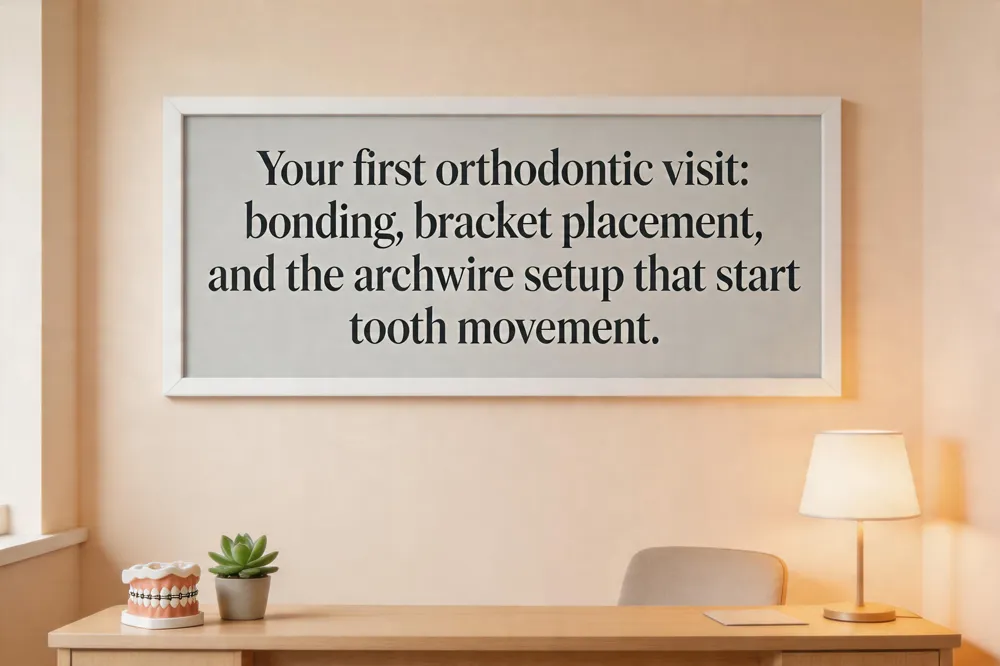 The bonding appointment at Trielle Orthodontics usually lasts one to two hours. First, the orthodontist cleans each tooth and may lightly etch the enamel to improve adhesive bonding. A special dental cement is applied, and brackets are positioned precisely on every tooth, often using a digital scan or custom bracket system for accuracy. Once the cement hardens, the archwire is threaded through the brackets and secured with elastic or self‑ligating clips, establishing the initial force to begin tooth movement.
Patients typically feel mild soreness for the first few days as the teeth begin to shift; this is normal and can be eased with soft foods, over‑the‑counter analgesics, and good oral‑hygiene. nHow long does braces take to put on? The actual placement of braces at Trielle Orthodontics usually takes about one to two hours during a single appointment. First, the orthodontist cleans and prepares the teeth, then bonds the brackets to each tooth with a special adhesive. Once the brackets are set, the archwire is threaded through them and secured, marking the start of your treatment. You may experience mild soreness for a few days, which is normal and can be managed with soft foods and over‑the‑counter pain relief. After the brackets are on, regular adjustments every 4–6 weeks will keep the teeth moving toward the desired alignment.
Overall Treatment Duration and What Influences It
 Most patients finish orthodontic treatment within 12 to 24 months, though exact duration depends on case complexity and appliance choice. Mild issues often take about a year, while severe misalignment or bite problems can extend toward two years. Teens usually progress a few months faster than adults, but compliance—regular visits and proper wear—keeps the schedule on track.
Shortest time period for braces – Very mild cases (slight crowding or spacing) can be completed in as little as six months, especially with clear aligners or limited‑scope braces. Clear aligners are often used for these cases. Pre‑adolescent interceptive therapy also falls in the 6‑12 month range.
How long do braces take to straighten teeth – Traditional metal braces typically need 12‑24 months, most patients finishing in the 18‑24‑month window. Complexity and bite corrections add time.
Average time – At Trielle Orthodontics the average is 12‑24 months, with mild cases at the lower end and moderate‑to‑severe cases toward 30 months.
Overbite correction – Moderate overbites need 12‑18 months, mild under a year, severe up to 24 months.
Phases of Orthodontic Care and Long‑Term Stability
 Phase 1 – Planning and preparation. The orthodontist evaluates using X‑rays, 3‑D scans and photos and creates a treatment plan before appliance placement. Phase 2 – Active treatment. Braces or clear aligners are fitted and adjusted every 4–8 weeks to move teeth. Phase 3 – Finishing and detailing. Wire changes, elastics or aligner refinements fine‑tune bite and aesthetics before a retainer is placed. Younger patients may receive an interceptive phase to guide jaw growth before treatment after permanent teeth erupt.
How long does it take to see a difference with braces? Most patients notice a visual change within two to three months; subtle shifts can appear after a few weeks in mild cases. By six to twelve months the smile improves, and treatment typically lasts 18 months to three years, depending on complexity and compliance.
Will my teeth move 20 years after braces? Yes. Teeth can keep shifting because periodontal ligament stays active. Retention—night‑time removable or fixed—prevents relapse. Good oral health and retainer use minimizes long‑term changes; an orthodontic check‑up can address drift.
Clear Aligners: How They Work and Their Timeline
 Clear aligners use a series of custom‑molded, removable trays that shift teeth gradually. At Trielle Orthodontics the plan is built with 3‑D digital scans, allowing precise mapping of each movement and the use of attachments or elastics when needed.
How long does clear aligner treatment take? Most patients finish in 12‑14 months; mild cases in 3‑6 months, moderate crowding in 6‑12 months, and severe misalignments may require 18 months or more, especially if refinement trays are added. Consistent wear of 20‑22 hours daily and changing trays every 1‑2 weeks keep the schedule on track.
Invisalign – what is it and how long does it take? Invisalign is a clear‑aligner system created with 3‑D imaging; typical treatment lasts 12‑18 months, mild cases as short as 6 months, complex cases up to 24 months. Success hinges on severity, bone density, and strict compliance.
How long did Billie Eilish have Invisalign? She wore Invisalign for about 18 months, closing a small gap before moving to retainers. She maintained the results with a custom retainer program for several years.
Financing Your Orthodontic Care
 Trielle Orthodontics offers a range of payment structures so patients can begin treatment without a large upfront cost. In‑house financing lets you put down $500‑$1,500 and spread the balance over 12‑ to 24‑months, producing monthly installments as low as $100. For qualified credit, zero‑interest plans are available, keeping payments steady throughout the course of braces or clear aligners.
Typical price ranges reflect case complexity. Traditional metal braces generally run $3,000‑$5,000, ceramic braces $4,000‑$6,000, and Invisalign $5,000‑$7,500. A $6,000 Invisalign quote falls squarely within the national average, while $7,000 represents a more comprehensive case but is still common.
Insurance benefits, flexible‑spending accounts, and third‑party lenders further reduce out‑of‑pocket costs. Our staff reviews your plan during the free consultation, matches it to any coverage you have, and creates a custom schedule that fits your budget.
Consistent attendance at 4‑8‑week appointments and proper oral hygiene also help keep the treatment on schedule, preventing costly extensions. Trielle also offers online payment portals for easy monthly tracking and automatic reminders.
Advanced Techniques, Modern Appliances, and Evidence‑Based Care
 Lingual braces – what are they?
Lingual braces are bonded to the tongue‑side of each tooth, making them virtually invisible. Custom brackets are fitted to the tooth’s inner surface and connected by a thin archwire that applies steady pressure. Treatment time mirrors conventional braces—typically 12‑24 months, longer for complex cases. Benefits include discretion, especially for adults, but patients may experience an adjustment period for tongue comfort, speech, and need meticulous oral‑hygiene.
Types of braces – what options are available?
Traditional metal braces remain the most cost‑effective, delivering reliable results in 18‑24 months. Ceramic braces blend with tooth colour for a subtler look, though they can be slightly slower. Self‑ligating braces replace elastic ties with built‑in clips, reducing friction and often shortening appointments, while clear‑aligner systems (e.g., Invisalign) provide removable, virtually invisible trays that usually finish mild‑to‑moderate cases in 6‑18 months.
Accelerated methods and surgical adjuncts
Adjuncts such as temporary anchorage devices, corticotomy, and micro‑osteoperforations can modestly speed tooth movement, but robust evidence is limited. Vibrational devices and laser therapy lack consistent clinical support.
Scientific evidence on treatment speed
Meta‑analyses show self‑ligating brackets do not significantly cut overall time versus conventional brackets, whereas clear aligners may reduce treatment by ~30 % for mild cases. Patient compliance—wearing appliances as prescribed and attending appointments—remains the strongest predictor of a shortened timeline.
Your Smile, Your Timeline, Your Choice
At Trielle Orthodontics we start every case with a complimentary, board‑certified consultation, using digital X‑rays, 3‑D scans and a personalized treatment plan that matches your tooth movement needs. We then recommend the appropriate appliance—traditional metal braces, ceramic, self‑ligating or clear aligners—to match your goals. Our modern technology, comfortable appliances and flexible financing make the journey smooth. Call today to book your free consultation and begin your custom smile plan.