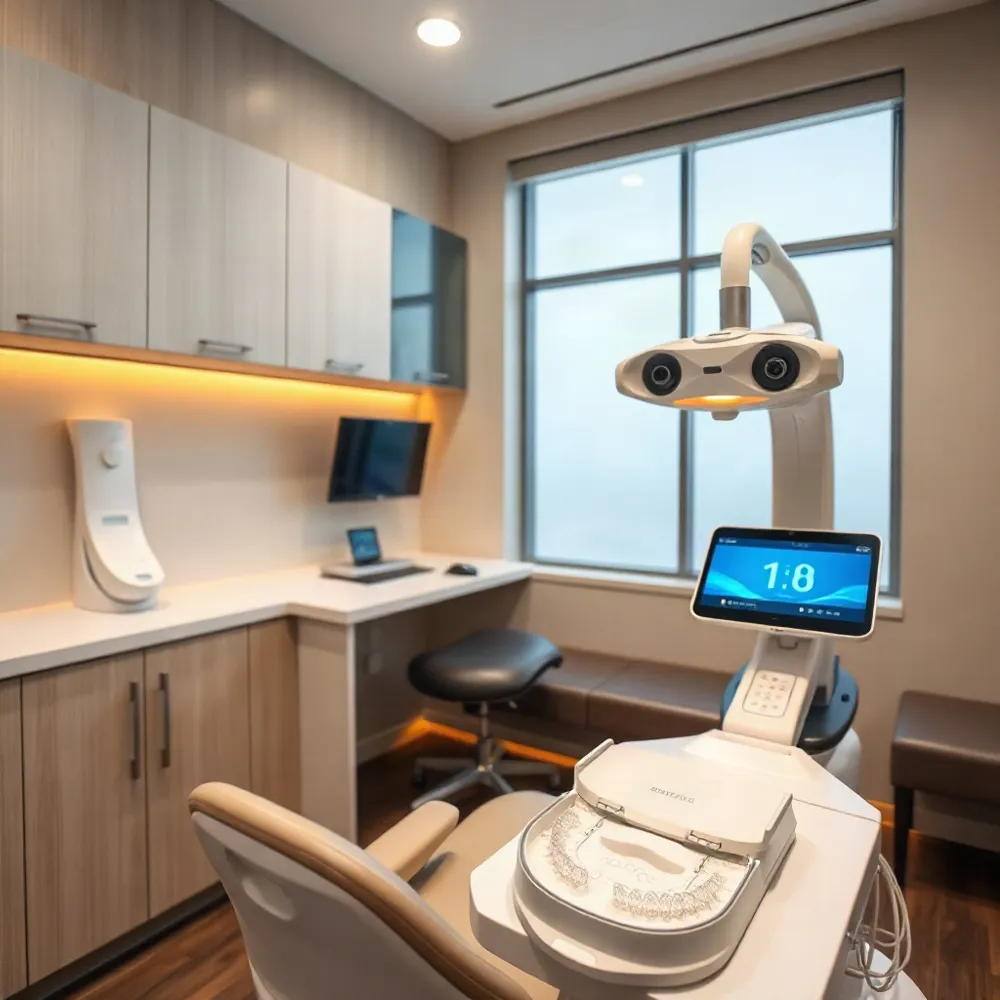
Understanding Orthodontic Insurance: A First Step
Navigating dental benefits can feel complex because orthodontic coverage is rarely uniform. Unlike standard preventive care, orthodontic benefits often exist as separate riders or distinct policy components that vary significantly by state and plan. At Trielle Orthodontics, we prioritize helping you clarify these details before your journey begins.
Lifetime Maximum. Unlike annual limits, this represents a one-time, non-renewing cap on the total amount an insurer will contribute to your orthodontic care over your lifetime.
Waiting Periods. Many policies enforce a set duration after enrollment during which no benefits are payable for major orthodontic treatments.
Your choice of provider also shapes your financial outcome. Choosing an in-network orthodontist often reduces your out-of-pocket expenses through negotiated fee structures. While competitors may focus on broad plan tiers, Trielle Orthodontics proactively verifies your specific coverage to minimize surprises. This guide will walk you through verifying your benefits, identifying exclusions, and utilizing financing options to make a confident smile accessible.
Key Terms in Orthodontic Insurance
What are common terms used in orthodontic terminology?
Orthodontic terminology includes several components used to describe treatment tools and clinical conditions. Common terms include brackets (small pieces bonded to teeth), archwires (the metal wires that guide tooth movement), and bands (metal rings often placed on back teeth for anchorage). Patients may also encounter aligners, which are removable clear trays, and attachments, the small, tooth-colored bumps used to assist aligner movement. Furthermore, terms like malocclusion describe a bad bite, while elastics refer to the rubber bands used to help align the jaws. Understanding these terms helps you communicate effectively with your orthodontist and navigate your treatment plan at trielleorthodontics.com.
Decoding insurance-specific vocabulary
Beyond clinical terms, you will encounter specific insurance concepts that dictate your financial responsibility. A deductible is the initial amount you must pay out-of-pocket before your plan begins to contribute. Coinsurance represents the percentage of costs you are responsible for paying, while a lifetime maximum functions as a one-time, non-renewing cap on the total benefits your plan will provide for orthodontic services. Many providers, including the team at Trielle Orthodontics, also navigate pre-authorization, a process where your treatment plan is submitted for insurer approval before work begins. Finally, be aware of a waiting period, which is a designated span of time after enrolling in a plan during which benefits are not yet available for use.
Coverage for Children, Teens, and Adults
Orthodontic coverage often functions as an optional rider or a distinct benefit within a dental insurance policy, rather than a standard feature included in every plan. Because of this structure, patients should not assume that basic preventive care, such as cleanings or exams, implies automatic coverage for corrective procedures like braces or retainers. Understanding your specific Summary of Benefits is the most reliable way to confirm what treatments are included under your current policy.
How does dental insurance typically cover orthodontic treatment for children and adults?
Orthodontic coverage varies significantly between plans, often appearing as an optional rider or a distinct benefit rather than a standard inclusion. Many policies provide coverage by paying a set percentage of the treatment cost up to a specific lifetime maximum per individual, rather than an annual limit. While some plans distinguish between medically necessary and cosmetic treatments, most offer consistent benefits for children, teens, and adults requiring braces, clear aligners, or retainers. Because these benefits can include specific waiting periods or unique eligibility rules, it is essential to review your individual policy documents carefully. We recommend contacting your insurance provider or our office directly to confirm your specific coverage details and help you plan your investment in a healthier smile.
When comparing your options, note that many providers structure these benefits through percentage-based reimbursement models. While some competitors may offer limited coverage for adults, Trielle Orthodontics works with most U.S. dental insurance plans to maximize the benefits available for both pediatric and adult patients. Many plans include coverage for traditional braces and clear aligners up to a lifetime maximum, so verifying your specific eligibility remains a priority before your first appointment.
Factors That Influence Your Orthodontic Costs
The total cost of orthodontic treatment is primarily determined by the complexity of your specific case, such as the severity of misalignment or bite issues, and the projected length of your treatment plan. The type of appliance you choose, ranging from traditional metal or ceramic braces to clear aligners like Invisalign, also significantly impacts the final price due to differences in material costs and technology. Additionally, factors like your age, the geographic location of the practice, and the specific expertise and diagnostic technology utilized by your orthodontist play a role in the overall investment. Because every patient's needs are unique, professional consultations are necessary to provide an accurate quote tailored to your oral health requirements. Trielle Orthodontics aims to make these treatments accessible by offering personalized care plans alongside flexible payment options to help manage your out-of-pocket costs.
How provider status and policy terms impact your investment
Beyond clinical variables, your insurance structure plays a significant role in your final financial responsibility. Selecting an in-network provider is one of the most effective ways to lower costs, as these orthodontists operate under negotiated fee structures that typically reduce patient expenses compared to out-of-network providers. If your plan is out-of-network, Trielle Orthodontics can often assist by filing claims on your behalf to maximize your remaining benefits.
It is also essential to review your plan for constraints like lifetime maximums and mandatory waiting periods. While many policies provide a lifetime maximum benefit ranging from $1,000 to $3,000, these caps do not renew annually. Furthermore, some plans require you to remain covered for a specific duration or wait through a designated period before active treatment is fully eligible for reimbursement. Always request a pre-authorization to clarify these details before your treatment journey begins.
When Orthodontics Is Medically Necessary
 Orthodontic treatment often falls under aesthetic care, but it is frequently a vital health-restorative intervention. The American Association of Orthodontists (AAO) defines medically necessary orthodontic care as treatment required to prevent, diagnose, or correct conditions like craniofacial anomalies or traumatic deviations that cause pain, atypical function, or significant physical malformation.
When is orthodontic treatment considered medically necessary for adults?
Orthodontic treatment for adults is considered medically necessary when it addresses structural or skeletal issues that compromise essential oral functions, rather than solely focusing on aesthetic enhancements. It is generally deemed necessary when a patient experiences severe malocclusion, jaw misalignment, or TMJ disorders that result in chronic pain, difficulty chewing, or impaired speech. Additionally, treatment may be medically required to resolve impacted or ectopic teeth, mitigate sleep-disordered breathing or obstructive sleep apnea, and address significant crowding that increases the risk of persistent gum disease and tooth decay. By correcting these underlying conditions, orthodontic care serves to restore proper function, protect long-term dental health, and improve the patient’s overall quality of life. When these conditions are present, the treatment is viewed as a health-restorative intervention rather than a cosmetic procedure.
Insurance adjudication for these cases is complex because the United States lacks a singular federal definition of medical necessity. Coverage standards vary significantly on a state-by-state basis, requiring patients to work closely with their provider to establish a diagnosis. To assist in standardizing these claims, the AAO has identified specific clinical "auto-qualifiers," such as an overjet of 9 mm or more or reverse overjet of 3.5 mm or more. At Trielle Orthodontics, our team assists patients by documenting these clinical indicators to support pre-authorization requests, helping to bridge the gap between your health needs and insurance benefits.
How to Verify Your Orthodontic Benefits
 Verifying your eligibility verification is a vital step to ensure your treatment costs are accurately managed. Before your first visit, you should log in to your insurance carrier’s online member portal or call the customer service number located on the back of your insurance card to discuss your specific policy details.
How can I verify my orthodontic benefits with my insurance provider?
When speaking with your insurance representative, ask for a clear breakdown of your coverage limits, any mandatory waiting periods, and the specific lifetime maximum associated with orthodontic care. Because employment changes can retroactively affect your status, it is important to confirm that your policy remains active and that no recent updates to your plan have occurred. Always document these interactions by recording the representative's name, the date of the call, and the specific information provided.
At Trielle Orthodontics, we recommend providing your insurance details to our team at least two to three days before your scheduled appointment. This lead time allows us to conduct a comprehensive benefits check on your behalf, reducing the risk of unexpected costs. Whether you are interested in traditional braces or clear aligners, our office will help you navigate your plan to maximize the benefits available for your smile.
Is Supplemental Orthodontic Insurance Worth It?
Deciding whether to add supplemental orthodontic insurance requires a clear view of your total investment. Orthodontic treatment generally ranges from $3,000 to over $13,000, and because many base dental plans limit or exclude adult care, these supplemental policies can be a practical tool to manage out-of-pocket expenses.
Supplemental plans often cover up to 50% of your treatment costs, though they function differently than standard dental insurance. Most rely on a lifetime maximum benefit rather than an annual cap, meaning you need to carefully evaluate the total payout limits before signing up.
Evaluating policy details
Before you enroll in a new plan, check for mandatory waiting periods that could delay your access to benefits. Some policies also include specific exclusions for appliances or cosmetic treatments, which can negate the anticipated savings.
At Trielle Orthodontics, we help patients review their existing employer-sponsored benefits to see if an additional policy truly provides value. We also offer zero-interest payment plans to help bridge the gap, often proving more flexible than the strict terms found in many external supplemental insurance contracts.
Common Exclusions and Limitations in Orthodontic Plans
Orthodontic coverage frequently operates with specific boundaries that distinguish it from general dental benefits. Most policies restrict coverage to functional corrective measures, meaning aesthetic improvements such as lingual braces, tooth-colored brackets, or clear ceramic braces are often excluded as elective expenses. At Trielle Orthodontics, we help patients identify these specific coverage gaps to provide transparent cost projections.
Many plans implement strict age limitations, frequently capping eligibility for dependents under 18 or 19 years old, which can limit or negate coverage for adult orthodontic care. Additionally, policies often contain specific exclusionary clauses that define when benefits begin and end. For instance, orthodontic work that commenced prior to your policy becoming active is rarely covered, and some contracts include a 'missing tooth clause' that limits coverage for prosthodontics if the tooth was lost before the current policy inception.
Retainers and long-term post-treatment care are another area where benefits fluctuate. While some providers incorporate these into their treatment fees, insurance plans may omit them entirely or require specific documentation to prove necessity. Furthermore, 'downgrade clauses' may allow an insurer to contribute only toward the cost of the least expensive treatment option, leaving the patient to cover the price difference for more advanced appliances. Trielle Orthodontics manages these complex pre-authorization requirements to ensure patients understand their financial responsibility before treatment begins.
| Limitation Type | Typical Impact | Strategic Consideration |
|---|---|---|
| Age Restrictions | Coverage for children only | Check policy for adult riders |
| Cosmetic Exclusions | Lingual or ceramic braces | Budget for elective preferences |
| Pre-Existing | Work started before coverage | Review effective date vs. onset |
Payment Options and Financing for Orthodontic Care
 Managing the investment in a healthy smile is often more accessible than many patients realize. At Trielle Orthodontics, we help patients navigate their financial options to ensure that necessary care remains budget-friendly. Because insurance coverage often leaves a remaining balance, utilizing tax-advantaged tools like a Health Savings Account (HSA) or a Flexible Spending Account (FSA) allows families to pay for treatment using pre-tax dollars.
Before you begin your journey, obtaining a pre-treatment estimate is a practical step to clarify your out-of-pocket responsibilities. This estimate outlines exactly how much your plan covers versus what you will pay personally. If you have concerns about the remaining costs, many providers offer in-house financing, which can bridge the gap left by insurance.
These payment plans are designed to accommodate a wide range of family budgets. Unlike standard loans, many orthodontic practices provide Zero-Interest payment Plans for Orthodontic Care to make monthly expenses manageable. Our team at Trielle Orthodontics works directly with your financial preferences, ensuring that cost is not a barrier to your oral health.
Take the Next Step Toward Your Confident Smile
Understanding how your insurance benefits apply to your care is the first step toward managing the investment in your oral health. While policies often vary, knowing your specific plan details allows you to maximize available coverage for treatments that align your bite and boost your long-term confidence.
At Trielle Orthodontics, our team simplifies this process by handling your eligibility verification and pre-authorization needs. We review your policy to identify exactly how your benefits integrate with our flexible Zero-Interest payment Plans for Orthodontic Care to keep your treatment affordable. Whether you are exploring clear aligners or traditional braces, we help you find the best path forward.
Investing in orthodontics provides benefits far beyond aesthetics, addressing functional concerns that prevent future dental issues. We invite you to contact us at trielleorthodontics.com to discuss your unique needs and start your journey toward a healthier, more confident smile today.