The Digital Evolution of Orthodontic Practice
The field of orthodontics is undergoing a significant transformation, moving away from traditional manual methods toward a digital-first approach. This shift integrates advanced diagnostic tools and sophisticated software to improve precision in care. At Trielle Orthodontics, this commitment to modern technology ensures that each patient receives a highly individualized treatment plan supported by data-backed insights rather than generalized rules.
Artificial intelligence and machine learning serve as core components of this modern workflow. According to a 2026 systematic review, AI models now replicate expert clinical decision-making with accuracy levels frequently exceeding 80%. By automating routine tasks like cephalometric analysis and landmark detection, these digital systems allow practitioners to dedicate more time to direct patient interaction and aesthetic outcomes.
Integrating these technologies provides tangible benefits for the patient experience. Digital simulations allow individuals to visualize their projected progress before treatment begins, fostering transparency and confidence. While some legacy clinics continue to rely on traditional, time-intensive molds, the team at Trielle Orthodontics uses digital 3D scanning and predictive analytics to streamline care, enhance comfort, and improve the overall predictability of the smile transformation process.
Foundations of Digital Treatment Planning
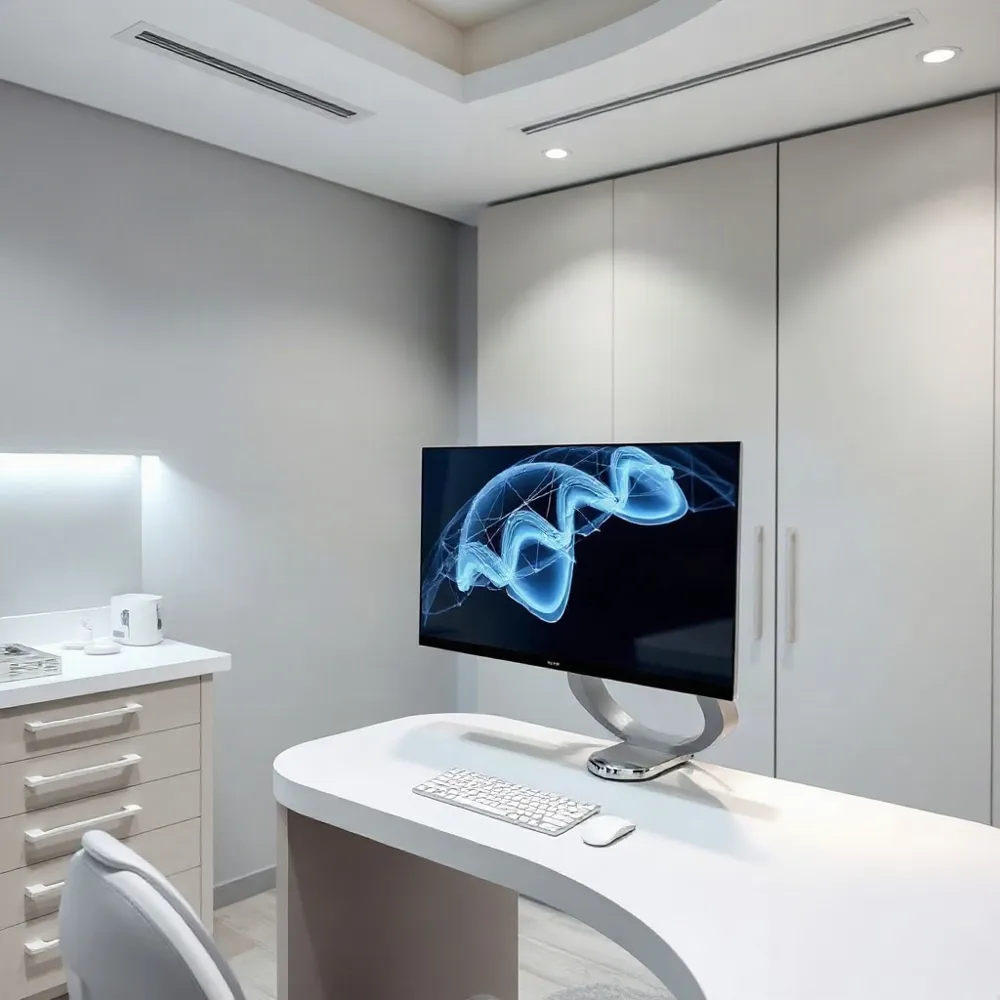 Digital treatment planning serves as the foundation of modern orthodontic care by integrating 3D imaging, specialized software, and diagnostic data to create highly accurate, customized treatment pathways. At Trielle Orthodontics, this technology enables the team to analyze a patient's precise dental and bone structure, simulating tooth movement before physical treatment even begins. This predictive capability allows for the precise placement of appliances and minimizes the need for mid-treatment adjustments, providing a level of accuracy that manual, rule-based systems often struggle to achieve.
The integration of Cone-Beam Computed Tomography (CBCT) and intraoral scanners has revolutionized how practitioners gather diagnostic data. These tools replace uncomfortable, traditional dental molds with precise, real-time digital impressions. While some providers still rely on legacy methods that lack the speed and detail of digital workflows, the approach at Trielle Orthodontics focuses on capturing comprehensive anatomical data to enhance both clinical efficiency and patient comfort.
Precision Through Advanced Fabrication
Digital workflows extend beyond diagnostics to the actual fabrication of orthodontic appliances. Utilizing Computer-Aided Design and Computer-Aided Manufacturing (CAD/CAM) technology, clinicians can design and print customized appliances such as clear aligners that are crafted to the specific anatomy of each patient. This data-driven approach ensures consistent quality, as AI-supported systems can often detect microscopic deviations during production that might be missed in standard manufacturing processes. A 2026 systematic review found that AI models can replicate expert clinical decision-making with accuracies frequently exceeding 80%, and at times surpassing 90% in specific diagnostic tasks.
| Technology | Clinical Benefit | Patient Impact |
|---|---|---|
| Intraoral Scanners | Digital Impressions | Eliminates messy molds |
| CBCT Imaging | 3D Bone Analysis | Greater diagnostic clarity |
| CAD/CAM Systems | Custom Appliance Fabrication | Improved appliance fit |
AI Integration in Diagnosis and Treatment
 Artificial intelligence is revolutionizing orthodontics by automating the analysis of complex diagnostic images, such as 3D scans and cephalometric X-rays, to identify anatomical landmarks with high precision. These systems assist clinicians in segmenting complex anatomical structures, including the mandibular canal and teeth, facilitating more accurate treatment planning and predictable tooth movement. Trielle Orthodontics leverages such predictive modeling to simulate various treatment trajectories, allowing practitioners to visualize potential outcomes and refine plans before active therapy begins.
Enhancing Diagnostic Accuracy Through Automation
Manual cephalometric analysis is often susceptible to operator variability and fatigue. In contrast, AI models can automate cephalometric landmark identification with accuracies sometimes exceeding 90% compared to human experts, as highlighted in a recent systematic review. By reducing reliance on traditional linear regression, these algorithms provide a robust foundation for identifying malocclusions, facial asymmetries, and specific skeletal needs.
Beyond basic measurements, deep learning techniques significantly improve the speed of segmenting 3D structures from Cone-Beam Computed Tomography scans. This capability is vital for AI models for skeletal maturation and growth prediction, particularly when determining cervical vertebral maturation stages. By accurately forecasting growth potential, these tools allow the team at Trielle Orthodontics to tailor interventions precisely to a patient's biological stage, ensuring that treatment aligns with their natural development.
| Clinical Application | AI Capability | Patient Benefit |
|---|---|---|
| Landmark Detection | Automated cephalometry | Faster, precise diagnostics |
| Growth Prediction | CVM stage analysis | Timely, effective intervention |
| Anatomy Mapping | 3D structure segmentation | Personalized treatment paths |
Enhancing Outcomes in Clear Aligner Therapy
 How does AI specifically improve the effectiveness of clear aligner therapy? This technology enhances treatment through hyper-precise planning that predicts tooth and root movement with significant accuracy. By processing large patient datasets, artificial intelligence helps clinicians refine the biomechanical sequencing of adjustments to ensure predictable results. While manual methods rely on clinician experience alone, these digital systems provide a formal feedback mechanism to re-evaluate outcomes.
At Trielle Orthodontics, we use this modern technology to facilitate real-time progress monitoring. Unlike traditional practices that might only catch issues during physical check-ups, our data-driven approach allows us to detect minor deviations early. This proactive stance helps minimize mid-treatment setbacks and the need for major clinical interventions. Research suggests that AI-supported models improve the prediction of outcomes and can even shorten treatment duration by enabling better tracking of patient progress.
Predictive analytics further manage treatment timelines by providing objective evaluations of aesthetic and functional harmony. Because these models can replicate expert decision-making with accuracies often exceeding 80%, they serve as powerful aids to our personalized care. By integrating these tools, we ensure a more efficient experience for patients in Union, NJ, focusing on results that align with individual anatomy rather than generalized averages.
The Human-AI Collaborative Partnership
Will artificial intelligence ever replace human orthodontists?
Artificial intelligence will never replace human orthodontists. Instead, it serves as a powerful decision-support tool that enhances clinical precision and operational efficiency. While AI excels at automating repetitive tasks like landmark detection, image segmentation, and treatment simulation, it lacks the human judgment required to manage complex biological variables and unique patient needs. At Trielle Orthodontics, we utilize these advancements to handle routine data analysis, which allows our specialists to dedicate more time to personalized care and individualized treatment planning.
Current research confirms that these tools should function as adjunctive aids rather than autonomous planners, as they still require human oversight link. AI acts as a sophisticated partner that assists in visualizing outcomes and streamlining workflows, but it cannot replicate the empathy, physical intuition, and professional responsibility of an expert doctor. A 2026 systematic review found that while AI models often replicate expert decision-making with high accuracy, they are designed to support, not supplant, clinical expertise link. Ultimately, the future of orthodontics remains rooted in expert-led care where technology empowers the human touch.
Technological Trends Driving Modern Care
Modern orthodontic care is increasingly defined by a fully digital workflow that replaces traditional, uncomfortable molds with high-resolution intraoral scanning for precise 3D imaging. Artificial intelligence and machine learning now play a critical role in treatment planning by analyzing vast datasets to optimize individual tooth movement and predict outcomes with remarkable accuracy. Additionally, 3D printing technology enables the rapid, customized fabrication of dental appliances and clear aligners, ensuring a superior, patient-specific fit. Remote monitoring tools further enhance precision by allowing orthodontists to track treatment progress in real-time and make prompt adjustments as needed. Together, these innovations minimize discomfort, reduce treatment times, and provide a highly personalized approach to achieving long-term dental health.
What are the latest technological trends driving precision in modern orthodontic care?
Advanced machine learning models rely heavily on large patient datasets to identify patterns that traditional rule-based software might overlook. By analyzing thousands of historical cases, these systems can predict outcomes with accuracy often exceeding 80% to 90% link. While some industry players rely on closed-source algorithms, Trielle Orthodontics leverages these data-driven insights to tailor individual care plans for patients in Union, NJ.
Visual technology is also transforming the patient experience through virtual and augmented reality. These tools allow patients to engage with their projected treatment paths, bridging the gap between clinical data and patient understanding. Furthermore, real-time remote monitoring via smart sensors helps clinicians stay informed about progress between visits. While some practices struggle to implement these updates, the team at Trielle Orthodontics prioritizes this modern technology to ensure consistent, data-backed adjustments, fostering comfort and efficiency throughout the entire aligner therapy process.
Embracing the Future of Personalized Smiles
Modern orthodontic care centers on the patient experience, where advanced tools and expert clinical judgment unite to create tailored outcomes. At Trielle Orthodontics, we use AI-driven treatment planning to provide precise, data-backed care that replaces outdated manual guesswork with reliable, high-resolution insights.
This synergy between professional expertise and machine learning allows for highly individualized journeys, with systems often achieving accuracy rates exceeding 80% in complex decision-making tasks. While technology accelerates efficiency and offers patients clear visual simulations, the final responsibility for health and aesthetics remains with your orthodontist.
We invite you to discover how these advancements can transform your smile. Visit our patient resources to learn how we integrate modern comfort with personalized technology to deliver lasting results for every patient in Union, NJ.